

[Opinion] Hayeoga and Dansimga
What though I do this, what though I do that / what though an arrowroot in Mt. Mansu got tangled / why dont we live longer while also being tangled?
At the end of the Goryeo dynasty, Lee Bang-won, who became King Taejong of the Joseon dynasty, searched the heart of Jeong Mong-ju by reciting this Korean poem.
When the Goryeo dynasty was on the verge of collapse after his father, Lee Seong-gye, had withdrawn troops from Wihwado, Lee Bang-won wrote this poem, which went down in history as Hayeoga, But Jeong Mong-ju, a loyal vassal of Goryeo, responded with his own poem, Dansimga, meaning loyalty, which reads, Though I die again and again / though my skeleton becomes dust and dirt, my soul completely disappearing / my singleness of heart toward my love will remain the same forever.
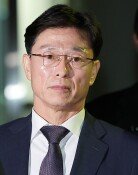
Former lawmaker Hahm Seung-hee broke with the Democratic Party reciting the two poems on June 27, the same day when the Democratic Party and a splinter group of the Uri Party decided to merge into a new party called the Centrist United Democratic Party. Four years ago, the members of the splinter group defected from the Democratic Party, which was their political birthplace, declaring they would create a party that would last for a hundred years.
Now they are blaming politicians supporting President Roh for the policy failures and turning their back on the Democratic Party again. Hahm rightly compared their inconsistency with Hayeoga.
Though the prosecutor-turned-politician became known for his book, There is No Sanctuary, a collection of behind-the-scenes stories involving a political scandal investigation in 1995, he is better known to the public as a prosecutor who broke sanctuary. Ahead of the 16th general elections in 2000, he chose to join the New Millennium Democratic Party. Though he was not free from criticism for being assigned to the election district in Seoul instead of Yangyang-gun, Gangwon-do, which is his hometown, his determination to weed out corruption and realize justice remains the same. He still expresses his laments that a thorough investigation into the slush fund scandal of Dongwha Bank in 1993 would have led to the early revelation of the scandal involving former president Roh Tae-woo.
In his defection statement, he said, From presidential candidates, lawmakers, and provincial governors, down to municipal councilors, politicians are ditching parties and factions with which they were affiliated whenever their political positions are threatened. His remarks should have made many of them feel the pangs of their consciences, but they appeared not affected at all.
Kim Chang-hyeok, Editorial Writer, chang@donga.com




 About Dong-A Ilbo