

Judiciary sets up panel to handle insurrection cases
Judiciary sets up panel to handle insurrection cases
Posted December. 19, 2025 09:48,
Updated December. 19, 2025 09:48
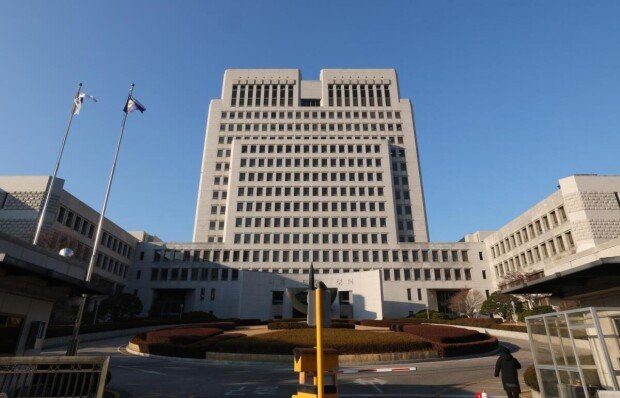
The court announced it will establish a dedicated panel to handle insurrection-related cases through expedited, focused hearings. The move is a voluntary step by the judiciary ahead of the passage of legislation being pursued by the Democratic Party of Korea to create a special panel for such cases.
The Supreme Court’s Office of Court Administration said that during an administrative meeting of justices on Dec. 18, it enacted internal rules governing the creation of dedicated panels and trial procedures for cases of national importance. The new rules are expected to take effect by the end of the year, following about 10 days of public consultation.
Under the new rules, courts may establish and operate dedicated panels for cases designated as matters of national importance. Such cases are defined as those involving crimes of insurrection or foreign aggression under the Criminal Act, or rebellion under the Military Criminal Act, that have far-reaching political, economic, and social repercussions, attract widespread public attention, and require swift adjudication. The rules also allow related cases to be assigned to the same dedicated panel.
This provision allows not only the insurrection charges against former President Yoon Suk Yeol related to the Dec. 3 martial law declaration, but also cases involving alleged accomplices, including former Prime Minister Han Duck-soo, to be handled by a single panel. A Supreme Court official said most cases indicted by the special prosecutor in connection with the insurrection charges are expected to be assigned to the dedicated panel.
Accordingly, first-instance verdicts for key defendants, including former President Yoon on charges of leading an insurrection, former Prime Minister Han, and former Interior and Safety Minister Lee Sang-min, are expected in January or February next year. Appeals in these cases are likely to be handled almost entirely by the dedicated panel at the Seoul High Court.
Unlike the Democratic Party of Korea’s proposal to establish an entirely new panel, the Supreme Court’s plan calls for selecting one of the existing criminal divisions at the Seoul High Court through a random process and assigning it exclusively to handle insurrection-related cases. The Democratic Party of Korea aims to pass a revised bill under which the dedicated panel would begin handling cases at the appellate level rather than the first trial, in an effort to avoid constitutional concerns. However, controversy over the bill’s constitutionality has persisted, as provisions requiring separate selection of judges could infringe on the chief justice’s authority over judicial appointments.
An official at the Office of Court Administration said that if the Democratic Party of Korea’s bill raises even minimal constitutional concerns and parties to the cases object, trial delays would be inevitable due to constitutional challenges. The official added that the court’s move would help remove such risks in advance. Separately, the ruling party said it plans to proceed with the bill it has been pursuing and aims to pass it at a plenary session as early as Dec. 24.
Won-Mo Yu onemore@donga.com








 About Dong-A Ilbo