

Top court ousts police chief over martial law
Top court ousts police chief over martial law
Posted December. 19, 2025 09:47,
Updated December. 19, 2025 09:47
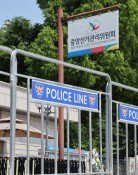
On December 18, South Korea’s Constitutional Court unanimously dismissed Cho Ji-ho, commissioner of the National Police Agency. The decision came one year after the National Assembly impeached him following the December 3 emergency martial law declaration. On the night the decree was issued, Cho, acting on orders from former President Yoon Seok-yeol, blocked lawmakers from entering the National Assembly and deployed police officers to support armed martial law troops at the National Election Commission. The court ruled that Cho’s execution of Yoon’s unconstitutional and illegal orders severely violated representative democracy and the principle of separation of powers, causing a serious negative impact on the constitutional order.
The ruling reaffirmed that the emergency martial law declared by Yoon, recalling the 45-year-old military coup, flagrantly violated the constitution. It also clarified that key figures who carried out the decree, including Cho, were subject to dismissal because of the significant harm their actions caused to the constitutional order. About three hours before the martial law was declared, Yoon summoned Cho to his Samcheong-dong residence and instructed him to deploy police forces to fully block the National Assembly in anticipation of military personnel entering the building. Cho followed the orders, forcing lawmakers attempting to enter the main chamber for a vote on the resolution to climb over fences, which delayed the vote.
The court emphasized that even under presidential orders, Cho’s failure to assess the constitutionality of his actions constituted a dereliction of his duty to uphold the law. During the night of the martial law, citizens resisted the armed forces, and military and police personnel on the scene carried out their duties only passively. Nevertheless, Cho blindly followed the presidential orders, betraying the public’s trust that the police commissioner would protect citizen safety. Cho claimed he did not recognize the unconstitutionality and illegality of the martial law, but the court rejected this, noting that any person with ordinary legal awareness would have understood the decree was unconstitutional.
The ruling also sends a strong signal to Cabinet members who received the martial law documents but remained silent, as well as to military leaders who argued they had no time to assess Yoon’s orders for constitutionality. A total of 27 individuals, including former President Yoon, senior ministers, top military officers, and police leaders such as Cho, are currently facing trials related to the martial law. Following the Constitutional Court’s judgment on the decree’s illegality, the country now faces the task of ensuring judicial accountability for the key actors without hesitation.





 About Dong-A Ilbo