

Trump urges China to help secure Strait of Hormuz
Trump urges China to help secure Strait of Hormuz
Posted March. 17, 2026 08:06,
Updated March. 17, 2026 08:06
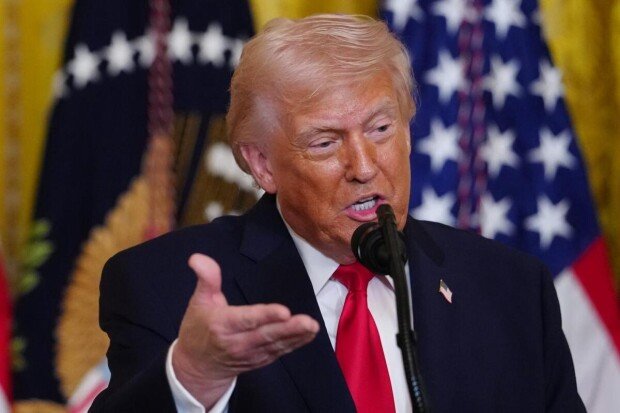
U.S. President Donald Trump on Saturday again pressed China to dispatch naval vessels to help safeguard shipping through the Strait of Hormuz, a crucial corridor for Middle Eastern crude oil, and suggested a planned summit with Chinese President Xi Jinping later this month or early next month could be delayed.
In a telephone interview with the Financial Times, Trump stressed China’s dependence on the waterway. “China imports 90 percent of its oil through the Strait of Hormuz,” he said, underscoring the need for Beijing to take a more active role. Referring to the time remaining before the planned U.S.-China summit, he added, “Two weeks is a long time. We could postpone it.”
Observers said the remarks appear to reflect growing concern in Washington over a prolonged disruption of shipping through the strait and the resulting rise in global oil prices. The comments were also seen as a signal that China, which has purchased large volumes of Iranian oil, should play a more active role in resolving the situation because it benefits heavily from crude shipments that pass through the route. Some analysts said Trump may believe China’s diplomatic ties with Iran could help stabilize the situation if Beijing becomes more directly involved.
Speaking aboard Air Force One while returning to Washington from Florida, where his Mar-a-Lago resort is located, Trump said the United States had asked about seven countries to join a coalition to escort vessels through the Strait of Hormuz and had received positive responses. The figure is two more than the five countries he had previously mentioned, including South Korea, China, Japan, the United Kingdom and France. Without identifying the additional countries, he said, “Whether we get the support or not, we will remember.”
In the Financial Times interview, Trump also referred to the North Atlantic Treaty Organization and warned that a lack of response or negative reactions to efforts aimed at stabilizing the Strait of Hormuz “would have a very bad impact on the future of NATO.”
U.S. Energy Secretary Chris Wright also urged major Asian economies to participate during an interview with ABC News on Saturday. He said China stands at the top of the list of countries benefiting from energy shipments through the strait, followed by Japan, South Korea and other Asian nations. “It is quite logical for a broad coalition of countries around the world to work together to reopen the strait,” he said.
China’s state-run Global Times offered a sharply different view. In an editorial published Sunday, the newspaper said the situation amounted to someone starting a fire and then asking the world to help put it out and share the cost. The commentary was widely interpreted as signaling China’s reluctance to participate, suggesting the United States is attempting to shift responsibility for the conflict and its consequences onto other countries.
Jin-Woo Shin niceshin@donga.com


![“李대통령 만들어줬는데 말 안 듣는다는 게 문조털래유 생각”[정치를 부탁해]](https://dimg.donga.com/c/138/175/90/1/wps/NEWS/IMAGE/2026/06/24/134175928.1.jpg)



 About Dong-A Ilbo