

World’s first AI art museum opens in LA
World’s first AI art museum opens in LA
Posted May. 02, 2026 07:37,
Updated May. 02, 2026 07:37
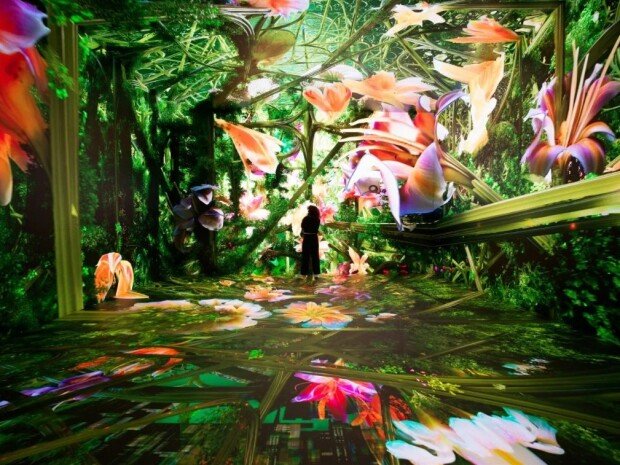
“Is it an art museum or a science center?”
That question is likely to frame the debate as Dataland, the world’s first museum dedicated to generative AI art, prepares to open in Los Angeles in June.
The New York Times reported April 30 that media artist Refik Anadol and his wife and longtime collaborator Efsun Erkılıç will open the museum on June 20.
After about two and a half years of planning and construction, Dataland will be located in Grand LA, a cultural complex that also includes The Broad, the Museum of Contemporary Art Los Angeles and the Walt Disney Concert Hall. The museum spans 3,250 square meters, with roughly a third of the space reserved for the hardware systems that run its exhibitions.
Described as a “living museum” powered by advanced technology, Dataland will open with an exhibition titled “Machine Dreams: Rainforest.” The project presents a machine-generated rainforest created through a proprietary AI system developed by Anadol’s studio. The model, called the Large Nature Model, was trained on extensive ecological datasets, including climate patterns and vegetation data, to produce an imagined rainforest rendered as digital art.
The studio said the system was trained using data from institutions such as the Smithsonian Institution, the Cornell Lab of Ornithology and the Natural History Museum in London.
Anadol said the museum is intended to redefine how art is understood in the age of artificial intelligence. He added that launching the first AI museum in Los Angeles was significant, given the city’s role as a global hub for art, music, film and architecture.
Born in Türkiye and based in the United States, Anadol has been a leading figure in AI-based art since 2008, best known for his “data paintings” created with algorithms and large datasets. In 2024, he held his first solo exhibition in Asia at Futura Seoul in Jongno District, Seoul.
Still, the rise of AI-generated art continues to fuel debate. Questions remain over whether machine-made works should be recognized as art and who holds ownership rights. Earlier this year, the U.S. Supreme Court declined to hear a case on whether artificial intelligence can hold copyright over creative works. In an interview with CBS News, Anadol said his studio has used only properly licensed and clearly attributed data since 2020, arguing there are no ethical concerns with its approach.
김태언 beborn@donga.com


![“1000만원 줄 테니 나가달라”…집주인 제안, 받아도 될까 [집과법]](https://dimg.donga.com/c/138/175/90/1/wps/NEWS/IMAGE/2026/06/19/134130634.3.jpg)

![‘월급 50만원, 아파트는 4억’ 베트남…청년들 “그냥 평생 월세 살란다”[딥다이브]](https://dimg.donga.com/c/138/175/90/1/wps/NEWS/IMAGE/2026/06/19/134141662.1.png)


 About Dong-A Ilbo