

U.S. arms package aims to strengthen Taiwan defense
U.S. arms package aims to strengthen Taiwan defense
Posted December. 19, 2025 09:49,
Updated December. 19, 2025 09:49
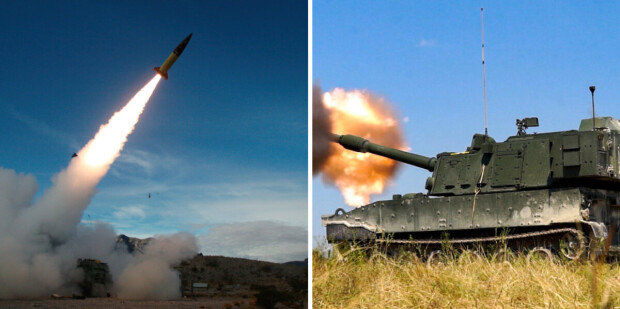
The U.S. State Department announced on December 17 that it will sell Taiwan weapons valued at approximately $11.1 billion, or about 16.4 trillion won. The package includes long-range ballistic missiles known as ATACMS, suicide drones, and the High Mobility Artillery Rocket System, or HIMARS. It marks the largest single arms sale the United States has ever made to Taiwan.
In a National Security Strategy report released earlier on December 4, the Donald Trump administration highlighted its firm commitment to countering China on security issues in Asia. The report stressed the strategic importance of defending the First Island Chain, which extends from Japan’s Kyushu through Okinawa, Taiwan, and the Philippines. It also made clear that bolstering Taiwan’s military capabilities, identified as a key component of that strategy, would remain a priority.
Observers say China is likely to continue expressing dissatisfaction as the United States proceeds with an unprecedented arms sale to Taiwan, amid ongoing tensions between China and Japan following remarks by Japanese Prime Minister Sanae Takaichi about intervening in a Taiwan contingency. Some analysts predict that arms sales to Taiwan could also become a topic during a planned meeting in Beijing next April between U.S. President Donald Trump and Chinese President Xi Jinping.
● Strengthening Taiwan’s military serves U.S. interests
According to The Associated Press and other media outlets, the U.S. State Department approved an $11.1 billion arms sales package for Taiwan. The deal, structured as eight separate contracts, includes 82 HIMARS launchers, 420 ATACMS missiles, and Javelin anti-tank missiles. These are the same types of weapons the United States has supplied to Ukraine in response to Russia’s invasion. The package also covers attack-type loitering munitions, including the ALTIUS-700M and ALTIUS-600.
This marks the second time the United States has announced plans to sell weapons to Taiwan since President Trump returned to office. On November 13, Washington also approved a contract to sell Taiwan $330 million, or about 490 billion won, worth of fighter jet parts.
In a statement released the same day, the State Department said the sale aims to support Taiwan’s efforts to modernize its weapons systems and maintain credible defense capabilities. The department added that these efforts align with U.S. national, economic, and security interests. It also said the sale is expected to help maintain political stability, a military balance, and economic progress across the Taiwan Strait.
The U.S. Senate passed the National Defense Authorization Act for fiscal 2026, which runs from October 2025 to September 2026, on the same day. The legislation includes measures to strengthen military assistance to Taiwan, authorizing up to $1 billion, or about 1.46 trillion won, in military support next year. It also recommends launching a U.S.-Taiwan joint program to develop unmanned systems before March 1, 2026.
Taiwan welcomed the announcement. Lin Chia-lung, Taiwan’s foreign minister, who recently made a private visit to the United States, expressed gratitude for Washington’s support of Taiwan’s self-defense capabilities and regional security. He said the move demonstrates through concrete action that the United States takes seriously its pledge in the National Security Strategy to deter conflict in the Taiwan Strait by strengthening military capabilities.
The NSS report stated that the United States would develop military capabilities capable of deterring aggression anywhere along the First Island Chain, sending a clear message to China. It specifically said Washington would enhance the military strength of the United States and its allies to prevent any attempts by China to seize Taiwan or undermine its defense.
● China protests, urges U.S. to stop malicious acts
China strongly protested the U.S. arms sales to Taiwan, saying they violate the one-China principle. The Chinese Ministry of National Defense said that when the United States announced last month that it would sell weapons to Taiwan, Beijing lodged a protest and urged Washington to immediately halt such "malicious acts” and avoid measures that could shock or damage bilateral relations.
Some analysts see the U.S. move as a response to China sending fighter jets and conducting military drills around Okinawa after remarks by the Japanese prime minister on Taiwan. Singapore-based media outlet Lianhe Zaobao said Washington’s successive approvals of arms sales to Taiwan signal an important political message and underscore the high priority the United States places on Taiwan’s security.
Chul-Jung Kim tnf@donga.com


![北 농민들도 “스마~일, 찰칵!”…노동신문 사진이 달라졌다[청계천 옆 사진관]](https://dimg.donga.com/c/138/175/90/1/wps/NEWS/IMAGE/2026/05/23/133980050.1.jpg)





 About Dong-A Ilbo