

UN Command warns against South Korea DMZ access approval
UN Command warns against South Korea DMZ access approval
Posted December. 18, 2025 08:50,
Updated December. 18, 2025 08:50
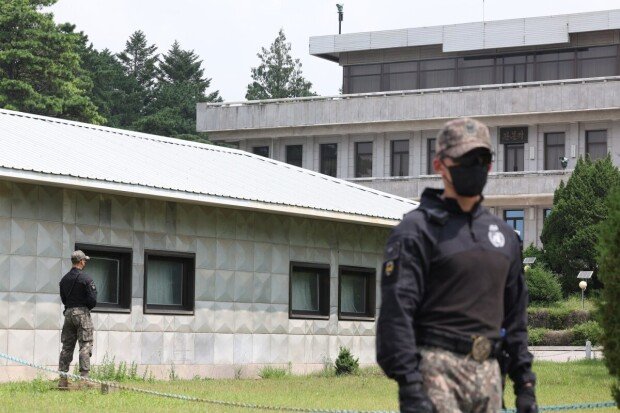
The South Korean ruling party is advancing legislation that would allow the South Korean government to approve access to the Demilitarized Zone, or DMZ, along the border with North Korea, limited to nonmilitary purposes. The proposal has received full support from the Ministry of Unification. In response, the United Nations Command, which holds authority over access to the DMZ, has taken the unusual step of publicly expressing its opposition.
In a statement posted on its website on Dec. 17, the United Nations Command said Article I, Paragraph 9 of the Armistice Agreement grants authority over DMZ access control to the United Nations Command Military Armistice Commission. It stressed that no one, whether military personnel or civilians, may enter the DMZ except those engaged in civil administration or relief activities, or individuals specifically authorized by the Military Armistice Commission. The command also cited Article I, Paragraph 10 of the agreement, which states that civil administration and relief activities within the DMZ south of the Military Demarcation Line fall under the responsibility of the commander in chief of the United Nations Command, emphasizing that approval authority rests exclusively with the command.
It is rare for the United Nations Command to issue an official statement opposing a specific policy matter. The move is widely seen as a response to legislative initiatives, including the proposed Act on Support for the Peaceful Use of the Demilitarized Zone, commonly known as the DMZ Act, which would give the South Korean government authority over access related to the preservation and peaceful use of the DMZ.
Meanwhile, Democratic Party of Korea lawmaker Jung Cheong-rae criticized the Ministry of Unification for not participating in a South Korea-U.S. diplomatic consultative body led by the Ministry of Foreign Affairs. Speaking at a Supreme Council meeting in Gangwon Province, Jung said he supports the Ministry of Unification’s position. He warned that a situation in which South Korea must seek U.S. approval for every issue and act only on what is permitted could instead create conditions that tightly constrain efforts to improve inter-Korean relations.
Jung added that he plans to move quickly to establish an internal party advisory body, tentatively named the Korean Peninsula Peace Strategy Committee. He said the panel would provide guidance on strengthening autonomy in South Korea-U.S. relations while expanding autonomy in inter-Korean relations.
Hyo-Ju Son hjson@donga.com





 About Dong-A Ilbo