

AI mistakes burden public sector workers
AI mistakes burden public sector workers
Posted June. 16, 2026 08:26,
Updated June. 16, 2026 08:26
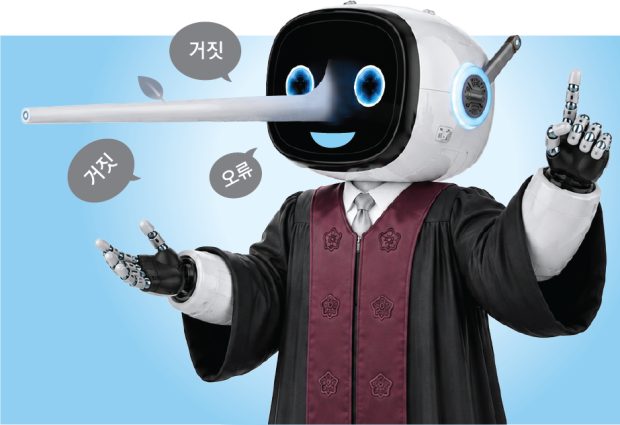
Earlier this month, a fire station in Seoul received a complaint alleging that items stored in the corridor of a commercial building were obstructing an emergency exit route. When the firefighter handling the case explained that the items were exempt from enforcement because they could be easily moved and sufficient evacuation space remained, the complainant pushed back.
“ChatGPT said it was a violation subject to penalties,” the complainant argued. The claim was based on an AI hallucination, an incorrect answer generated from outdated regulations that had since been revised. The firefighter ultimately spent hours after work tracking down the relevant provisions and explaining why the complaint lacked legal grounds.
Public officials are increasingly confronting similar cases as more citizens place undue confidence in answers generated by AI services such as ChatGPT. Many users fail to recognize the possibility of hallucinations or the limitations of AI training data, instead treating inaccurate responses as authoritative. The problem is particularly pronounced in areas such as law and public policy, where even small differences in facts and conditions can lead to very different interpretations.
According to the Institute of Information & Communications Technology Planning & Evaluation, which is affiliated with the National Research Foundation of Korea, major AI models correctly recognized their own hallucinations in legal responses only 64% of the time. Even so, many complainants accept plausible but incorrect AI-generated answers as definitive interpretations of the law, leaving public officials to verify the facts and correct the record.
Experts warn that blind trust in AI should not be allowed to create unnecessary administrative costs. Choi Ho-taek, a professor of public administration at Paichai University, said public institutions should establish clear working guidelines for handling complaints based on AI-generated misinformation.
정서영 cero@donga.com

![[단독]선관위, 결재없이 55억 써도 견책… “솜방망이 징계에 기강 해이”](https://dimg.donga.com/c/138/175/90/1/wps/NEWS/IMAGE/2026/06/19/134138827.4.jpg)






 About Dong-A Ilbo