

U.S. grants Iran temporary oil export reprieve
U.S. grants Iran temporary oil export reprieve
Posted June. 18, 2026 08:09,
Updated June. 18, 2026 08:09
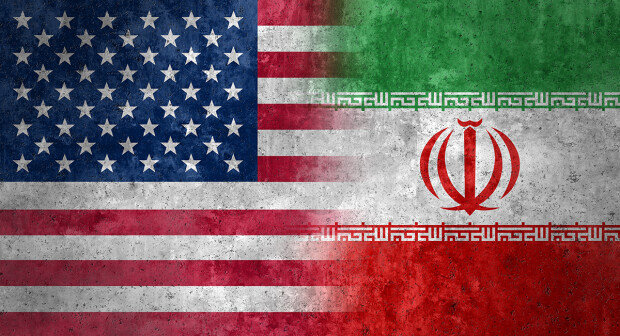
The administration of U.S. President Donald Trump will allow Iran to resume crude oil exports for 60 days beginning immediately after the signing of a memorandum of understanding aimed at ending the conflict in Bürgenstock, Switzerland, on June 19, local time, The Wall Street Journal and Axios reported Tuesday. The temporary sanctions relief will also extend to the financial, insurance and shipping services needed to support Iranian oil exports, the reports said.
The provision is included in Article 10 of the 14-point memorandum obtained by Bloomberg News. Iran has faced a range of international sanctions since the 1979 Islamic Revolution and later over concerns surrounding its nuclear program. Its oil exports were largely shut down in May 2019 after the first Trump administration withdrew from the 2015 nuclear accord, formally known as the Joint Comprehensive Plan of Action, a year earlier. The new arrangement would restore a major source of revenue for Tehran.
The Wall Street Journal said the move is intended to give Iran an economic incentive to engage in the additional 60 days of negotiations outlined in the memorandum. Critics, however, are likely to question the decision to ease sanctions before Iran has carried out major commitments such as dismantling its nuclear program and diluting its stockpile of highly enriched uranium.
A proposed $300 billion reconstruction and development fund aimed at supporting postwar investment in Iran is also beginning to take shape. Reuters reported that companies from South Korea, Japan, Singapore, Malaysia and the United States have already made investment commitments, while more than $150 billion in financing has been pledged. The investments are expected to target sectors including energy, logistics, manufacturing and transportation. No U.S. government funding or subsidies would be involved.
Meanwhile, leaders of the Group of Seven issued a joint statement on geopolitical issues Tuesday at the close of the G7 summit in Evian, France, voicing strong support for a broader diplomatic agreement to follow the ceasefire memorandum signed by Trump.
The leaders also reaffirmed that freedom of navigation without restrictions or transit fees is fundamental to global commerce and underscored the importance of keeping the Strait of Hormuz open.
Jin-Woo Shin niceshin@donga.com

![[김순덕 칼럼]이 대통령은 왜 ‘탄핵 가능성’을 언급했을까](https://dimg.donga.com/c/138/175/90/1/wps/NEWS/IMAGE/2026/06/17/134133459.1.jpg)
![[단독]선관위, 결재없이 55억 써도 고작 견책…‘자체 징계’ 솜방망이](https://dimg.donga.com/c/138/175/90/1/wps/NEWS/IMAGE/2026/06/19/134138827.4.jpg)



 About Dong-A Ilbo