

Trump warns Iran ahead of looming deadline
Trump warns Iran ahead of looming deadline
Posted April. 06, 2026 09:08,
Updated April. 06, 2026 09:08
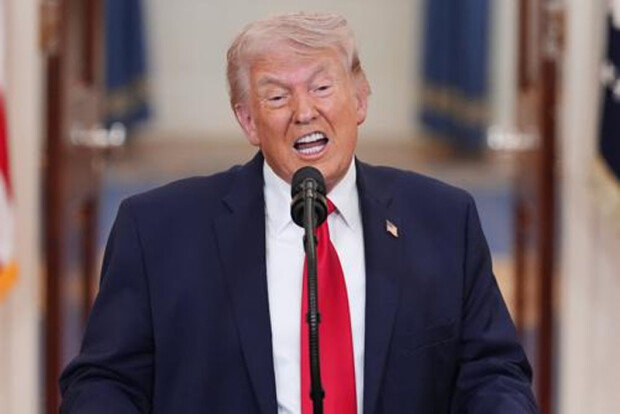
U.S. President Donald Trump on April 4 warned Iran that “time is running out,” saying it has 48 hours before facing severe consequences. He reiterated a deadline tied to his demand that Iran reopen the Strait of Hormuz, warning that failure to comply could trigger strikes on key infrastructure, including power plants. The deadline is set for 8 p.m. April 6 Eastern time, or 9 a.m. April 7 in South Korea.
Iran answered with a direct warning of its own. Ali Abdollahi Aliabadi, commander of the Khatam al-Anbiya Central Headquarters, which coordinates Iran’s armed forces, said any attack on the country’s critical infrastructure would bring serious retaliation. With one day left before the deadline, tensions between the two sides are approaching a critical point.
Trump, posting on Truth Social, reminded Iran that it had been given 10 days to either accept U.S. terms to end hostilities or reopen the Strait of Hormuz. He first set March 27 as the deadline before extending it to April 6. He also released footage of airstrikes on Tehran, saying the attacks killed several senior Iranian military leaders and criticizing their leadership of the Islamic Revolutionary Guard Corps.
He has warned that if no agreement is reached, the United States could expand its campaign beyond military targets to include power plants, oil fields, Kharg Island, a key oil export hub, and desalination facilities. Such strikes, he said, would deal a severe blow to Iran’s economy.
Despite the warning, Iran has continued its military response. On April 4 and 5, it launched missile and drone strikes toward Israel and Kuwait. The attacks reportedly hit Kuwait’s Finance Ministry building as well as oil facilities, power plants and desalination infrastructure.
Iran also said it shot down U.S. F-15 fighter jets and A-10 attack aircraft on April 3, despite U.S. claims that its air defenses had been neutralized. U.S. special forces rescued the pilots, but the incident has raised questions about Washington’s earlier assessment of Iran’s air defense capabilities.
Separately, Iran has signaled it could move to block another strategic shipping route, the Bab el-Mandeb Strait in the Red Sea, a gateway to the Suez Canal. Mohammad Bagher Ghalibaf, speaker of Iran’s parliament, alluded to the possibility in a post on X on April 3, noting the volume of global shipments of oil, liquefied natural gas, grain and fertilizer that pass through the corridor.
The Iran-aligned Houthi rebels in Yemen, which have conducted operations in the Red Sea, declared their involvement in the conflict on March 28. Analysts say the group is likely to play a key role in any attempt to disrupt maritime traffic in the region.
Keun-Hyung Yoo noel@donga.com








 About Dong-A Ilbo