

Semiconductor growth offsets slump in construction sector
Semiconductor growth offsets slump in construction sector
Posted January. 31, 2026 09:08,
Updated January. 31, 2026 09:08
South Korea’s industrial production recorded its slowest growth in five years last year, excluding the contraction during the COVID-19 pandemic.
While the semiconductor sector continued to lead the economy, widening gaps between semiconductors and other industries underscored a K-shaped polarization trend. The construction sector, in particular, fell into a deep slump. Although the KOSPI briefly topped 5,300, signaling a record stock market rally, the broader real economy showed few signs of recovery.
According to annual industrial activity data released by the National Data Office on Jan. 30, South Korea’s overall industrial production index for 2025, based on 2020 at 100, reached 114.2, up just 0.5 percent from a year earlier. That marked the weakest growth since 2020, when output fell 1.1 percent during the pandemic, and amounted to roughly one-third of the 1.5 percent increase recorded in 2024.
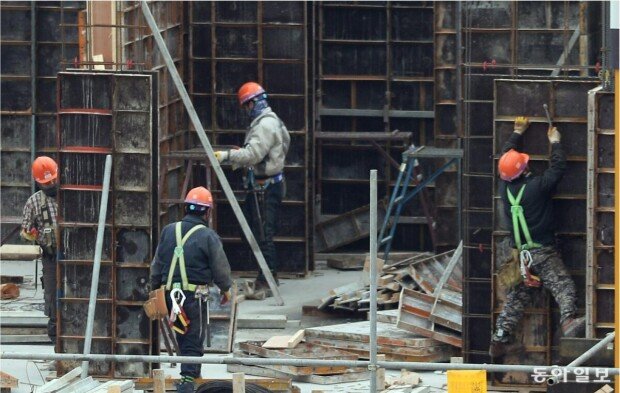
Semiconductor output rose 13.2 percent, while other transportation equipment, including shipbuilding, increased 23.7 percent, driving overall industrial gains. By contrast, construction output, measured by completed domestic projects, dropped 16.2 percent, highlighting the sharp divergence across sectors. Retail sales, a key indicator of consumer demand, rose only 0.5 percent from a year earlier. Consumption coupons distributed starting in July 2025 helped end a three-year decline, but the overall increase remained limited.
세종=정순구 soon9@donga.com



![[오늘의 운세/7월 8일]](https://dimg.donga.com/c/138/175/90/1/wps/NEWS/IMAGE/2026/07/07/134255552.1.jpg)
![매년 30억 쓰며 노화 막던 억만장자, 완치법 없는 자가면역질환 진단 [노화설계]](https://dimg.donga.com/c/138/175/90/1/wps/NEWS/IMAGE/2026/07/07/134249064.3.jpg)



 About Dong-A Ilbo