

Analysts raise profit outlooks as semiconductor boom accelerates
Analysts raise profit outlooks as semiconductor boom accelerates
Posted December. 15, 2025 08:49,
Updated December. 15, 2025 08:49
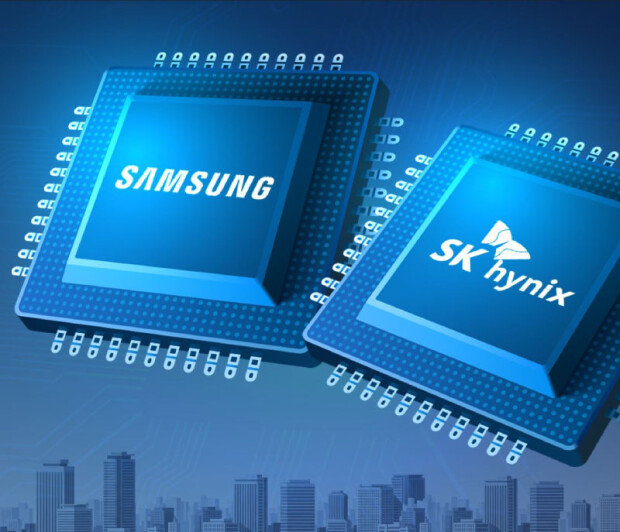
As a full-fledged semiconductor “supercycle,” or boom period, takes hold, forecasts suggest that the combined operating profit of Samsung Electronics and SK hynix next year could approach 200 trillion won. Since early December, major securities firms have steadily raised their profit outlooks for the two chipmakers.
According to the investment banking industry on Dec. 14, Kiwoom Securities raised its forecast for Samsung Electronics’ consolidated operating profit in 2026 to 107.612 trillion won. The estimate is 29.3 percent higher than the market consensus, defined as the average projection by securities firms over the past three months, which stands at 83.242 trillion won. iM Securities also lifted its forecast for SK hynix’s consolidated operating profit next year to as much as 93.843 trillion won. Taken together, the most bullish projections place the two companies’ combined operating profits above 200 trillion won.
● Forecast of 200 trillion won in operating profit, driven by DRAM
The memory semiconductor market, including commodity DRAM, is facing a deepening supply shortage as production fails to keep pace with rapidly rising demand, pushing prices sharply higher. A key driver has been aggressive memory purchases by cloud service providers building artificial intelligence data centers. According to market research firm DRAMeXchange, the average price of a PC DRAM commodity product, DDR4 8Gb 1Gx8, reached $8.10 in November, roughly six times higher than its January level of $1.35.
Against this backdrop, investor attention is increasingly turning to Samsung Electronics. Among the world’s three major memory chipmakers, alongside SK hynix and U.S.-based Micron Technology, Samsung commands the largest production volume and derives a greater share of its revenue from DRAM. LS Securities said rival companies are expected to face shortages of fabrication capacity next year, while Samsung Electronics retains ample room to expand DRAM output. The firm added that further upward revisions to earnings forecasts remain possible, depending on future memory price trends.
SK hynix, which faces tighter constraints on expanding production capacity, is expected to record particularly strong gains in profitability. Hyundai Motor Securities said that with prices for even commodity DRAM rising sharply, SK hynix is likely to post the highest profitability among global DRAM manufacturers.
● Expectations rise for diversified HBM customers
Record-setting earnings forecasts for South Korean memory chipmakers are also underpinned by global big tech companies’ push to develop customized artificial intelligence chips in-house. As the market for application-specific integrated circuits continues to expand in an effort to reduce reliance on Nvidia’s graphics processing units, demand is expected to rise sharply for high-bandwidth memory produced by Samsung Electronics and SK hynix.
Google’s tensor processing unit, or TPU, is a leading example. The TPU is an AI chip used to train and run Google’s artificial intelligence model, Gemini 3. OpenAI has also begun developing its own AI chips. Amazon Web Services has developed Trainium 3, and Microsoft plans to release its AI chip, Maia 200, next year.
“Samsung Electronics’ shipments of high-bandwidth memory in 2026 are expected to more than triple from this year as the company secures application-specific integrated circuit developers as major customers," said Park Yu-ak, a senior research fellow at Kiwoom Securities. “Sales of HBM used in leading ASIC chips are likely to rise sharply in the first quarter of next year, and shipments of HBM4 to be installed in Nvidia’s Rubin platform are set to begin in earnest in the second quarter.”
이민아 기자 omg@donga.com








 About Dong-A Ilbo