

Lee vows no pursuit of unification by absorption
Lee vows no pursuit of unification by absorption
Posted August. 16, 2025 07:59,
Updated August. 16, 2025 07:59

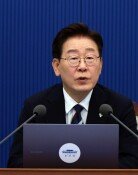
President Lee Jae-myung said Thursday in his Liberation Day address that South Korea will respect North Korea’s current system and will not seek unification by absorption, making clear the government has no intention of engaging in hostile acts. He proposed restoring the Sept. 19 inter-Korean military agreement despite Pyongyang’s rejection and urged the resumption of economic cooperation for mutual growth.
Speaking at the 80th Liberation Day ceremony at the Sejong Center for the Performing Arts in Seoul, Lee said the South and the North are not enemies and pledged that his administration will continue consistent measures to ease tensions and rebuild trust. His remarks came despite criticism from Kim Yo Jong, the influential sister of North Korean leader Kim Jong Un, who condemned Lee’s policy as a “delusion of absorption unification” and a “foolish pipe dream,” while indicating Pyongyang’s plan to enshrine the “two hostile states” doctrine in its constitution.
Lee said his government will restore the Sept. 19 inter-Korean military agreement preemptively and in stages, adding that existing accords will be respected and implemented immediately where possible. He signaled that South Korea could first reinstate provisions halting military exercises and banning drone flights near the Military Demarcation Line, even without North Korea’s cooperation. Pyongyang declared the complete annulment of the 2018 pact, signed under the Moon Jae-in administration, in November 2023.
Calling this year, the 80th anniversary of Liberation Day, a timely opportunity to end an era of confrontation and hostility, Lee said his government will work to restore the foundation for exchanges and cooperation that can tangibly improve the lives of South and North Koreans and create conditions for joint growth.
On relations with Japan, Lee said the country is a neighbor sharing the same yard and an indispensable partner in economic development. He added that his government will pursue a future-oriented path of mutual cooperation through shuttle diplomacy based on pragmatic, national interest–driven foreign policy, meeting frequently and speaking candidly. “We expect the Japanese government to face the painful history of the past and make efforts to ensure mutual trust between the two nations is not undermined,” he said. His remarks came ahead of his planned visit to Japan on Aug. 23, emphasizing economic and security cooperation without directly addressing historical disputes.
Hoon-Sang Park tigermask@donga.com







 About Dong-A Ilbo