

Military academy merger needs broader consensus
Military academy merger needs broader consensus
Posted July. 07, 2026 08:22,
Updated July. 07, 2026 08:22
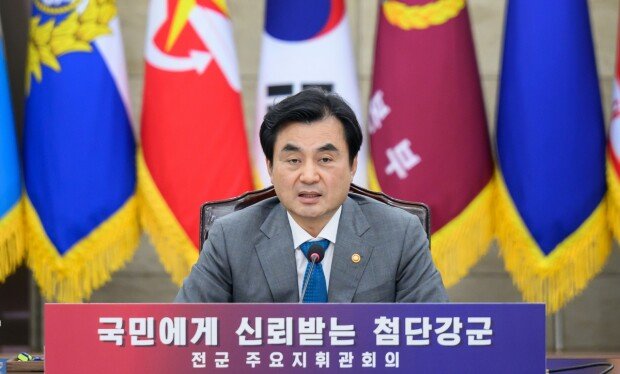
The Ministry of National Defense was set to unveil its blueprint Monday for merging the Army, Navy and Air Force academies into a single Korea Armed Forces Academy. Instead, it abruptly canceled the briefing just one hour and 40 minutes before it was scheduled to begin. The ministry said Defense Minister Ahn Gyu-back had been called to attend a meeting at the presidential office and promised to announce a new briefing date later. The timing, however, is difficult to separate from growing resistance to the plan, both within the military and among alumni groups. Alumni associations from the three academies are scheduled to hold a rally Tuesday opposing the merger.
The ministry envisions a system in which Army, Navy and Air Force cadets complete a common curriculum during their first two years before receiving branch-specific instruction in their final two years. Its argument is that the three services can no longer afford to operate independently as modern warfare increasingly integrates artificial intelligence, cyber capabilities and space operations. With the military also restructuring its force to raise the proportion of career personnel in response to South Korea's shrinking population, updating the way it trains future officers is a reasonable objective.
The concern is not the goal itself but the pace. The ministry created the task force dedicated to the merger only two months ago. Each service has spent decades building its own command structure, with the Army focused on ground operations and logistics, the Navy on maritime warfare and the Air Force on air operations. Critics warn that moving ahead with academy integration before the services have had enough time to strengthen operational coordination could dilute the specialized expertise each branch has developed. It is also worth asking why major military powers such as the United States, Britain and France continue to educate officers at separate service academies while cultivating joint operational capability through integrated training and command experience after graduation.
Despite these unresolved questions, the ministry has concentrated on meeting a deadline. Its goal is to admit the first class under the new system in the 2028 academic year, when today's high school sophomores enter college. Yet it has not held a single public hearing to examine the expected benefits of consolidation or invite broad professional debate. A similar effort under the Lee Myung-bak administration ultimately collapsed after prolonged disagreement among the three services. Simply postponing this week's announcement will not solve the underlying issues. Before moving forward, the ministry should engage in a genuine process of deliberation by listening to opposing views, addressing legitimate concerns and building broad consensus. Only then will the reform stand a realistic chance of succeeding.



![[오늘의 운세/7월 7일]](https://dimg.donga.com/c/138/175/90/1/wps/NEWS/IMAGE/2026/07/07/134248270.1.jpg)




 About Dong-A Ilbo