

Power must support South Korea's mega projects
Power must support South Korea's mega projects
Posted July. 06, 2026 08:37,
Updated July. 06, 2026 08:37
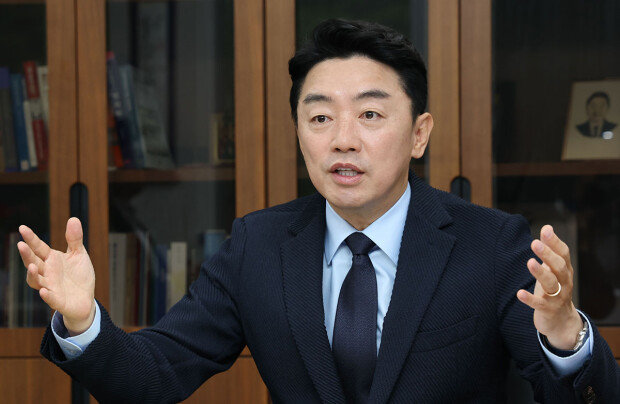
South Korea's bid to build world-class semiconductor, physical AI and AI data center industries will require a major expansion of its electricity supply. In an interview with The Dong-A Ilbo on Sunday, Presidential Chief of Staff Kang Hoon-sik said all options, including nuclear power, should be considered to support the planned semiconductor cluster in the Honam region. "Building a nuclear power plant typically takes seven to nine years, so we need to find ways to speed up the process," he said. Climate, Energy and Environment Minister Kim Sung-hwan also told The Dong-A Ilbo on July 2 that the government could consider building additional nuclear reactors.
The three mega projects will require major investment in electricity and water infrastructure before they can move forward. The planned semiconductor cluster in Gwangju alone is expected to consume 6.3 gigawatts of electricity, while AI data centers planned across the Chungcheong, Yeongnam, Honam and Gangwon regions will require another 18.4 gigawatts of generating capacity by 2035. Together, that is equivalent to the output of more than 24 nuclear reactors, based on roughly 1 gigawatt per reactor, almost matching the capacity of South Korea's 26 reactors currently in service. Without a significant increase in power generation, the country risks falling behind in the global semiconductor race before these projects even begin.
Semiconductor fabrication plants require an uninterrupted power supply. Even a brief outage or a slight fluctuation in voltage can halt production. The Honam region has abundant solar and wind resources, but renewable energy alone cannot provide the steady supply these facilities demand because generation varies with weather conditions and the time of day. Additional nuclear capacity offers the most practical source of reliable baseload power to complement renewable energy.
Speaking on a television program on July 3, Kim said existing nuclear sites have enough space for four additional reactors: two at the Hanbit Nuclear Power Plant in Yeonggwang, South Jeolla Province, and two at the Saeul Nuclear Power Plant in Ulju, Ulsan. Building reactors at existing sites would shorten construction because land acquisition would not be necessary. The remaining challenge is to secure local support by addressing community concerns and easing opposition.
Every two years, the government updates its Basic Plan for Long-term Electricity Supply and Demand, a 15-year blueprint for the nation's electricity needs and power generation. Under the 11th plan, completed last month, Yeongdeok in North Gyeongsang Province and Gijang in Busan were designated as candidate sites for two conventional nuclear reactors and one small modular reactor, respectively. The 12th plan, which will span 2026 to 2040 and is expected around the National Assembly's regular session in September, should spell out where, when and how the government plans to secure the additional power needed to support the three mega projects.
Samsung and SK Group have pledged a combined 4,755 trillion won for semiconductor fabrication plants in Yongin, Pyeongtaek and the Honam region. Together with Hyundai Motor, LG and Hanwha, the companies have also announced another 312 trillion won in planned investment across the Yeongnam region. Private companies have committed the capital. The government and local authorities must now deliver the infrastructure needed to support those investments.

![[오늘의 운세/7월 7일]](https://dimg.donga.com/c/138/175/90/1/wps/NEWS/IMAGE/2026/07/07/134248270.1.jpg)




 About Dong-A Ilbo