

Korean football faces moment of reckoning
Korean football faces moment of reckoning
Posted June. 29, 2026 08:31,
Updated June. 29, 2026 08:31
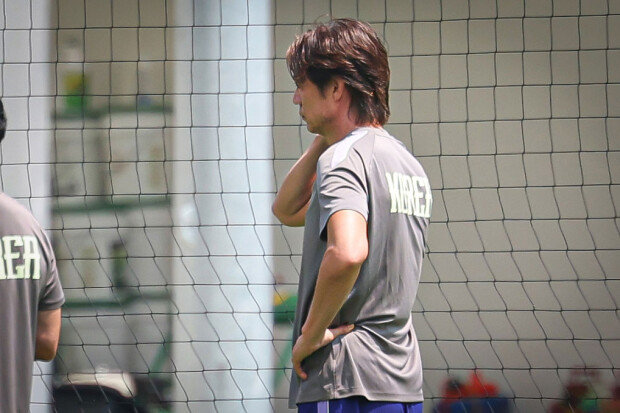
South Korea's national football team has been eliminated after failing to advance beyond the group stage at the 2026 FIFA World Cup. Following its loss to South Africa, the team's hopes rested on results elsewhere, but Congo's victory over Uzbekistan on June 28 sealed its exit. With the World Cup expanded to 48 teams for the first time, the result is even more disappointing. Under the previous 32-team format, South Korea would not even have qualified for the tournament.
This was widely regarded as the most talented South Korean squad ever assembled for a World Cup. Son Heung-min, Lee Kang-in and Kim Min-jae were among several starters playing for top European clubs. A favorable draw only reinforced expectations that the team would progress with little difficulty. Instead, South Korea slumped to a lifeless 1-0 defeat against South Africa, the side many viewed as the weakest in the group, without creating a genuine scoring opportunity. The defeat pointed squarely to Hong Myung-bo's failure to build a system that made the best use of his players' abilities. His response after the third match did little to inspire confidence. "I'm surprised myself by how we played," he told reporters, a remark that came across as an excuse rather than an explanation.
Concerns over Hong's appointment long predated the World Cup. Under Korea Football Association rules, the national team coach must first be recommended by the National Team Strengthening Committee before receiving board approval. A Ministry of Culture, Sports and Tourism investigation two years ago found that both steps had effectively been bypassed. The KFA's technical director, despite lacking the authority to recommend a coach, interviewed Hong at the direction of President Chung Mong-gyu before effectively deciding on his appointment. The board's approval followed only as a formality. Similar concerns surrounded the appointment of former coach Jurgen Klinsmann, whose hiring was also widely seen as a unilateral decision by Chung and whose tenure later unraveled amid controversy, including criticism over his extensive remote work. The ministry called for severe disciplinary action against Chung, while football figures, including commentator Park Ji-sung, warned that the foundations of South Korean football were being eroded. Yet Chung went on to win a fourth term as KFA president last year, showing how little internal accountability exists within the organization.
Many within South Korean football say the KFA's closed decision-making process and refusal to heed outside criticism have left the sport mired in frustration. Even the national team's pre-tournament friendlies drew noticeably smaller crowds than in the past. This disappointing exit is likely to deepen public disillusionment and indifference. Considering how heavily the health of South Korean football has long depended on the popularity of the national team, this World Cup failure should be seen not as an isolated setback but as a symptom of a much deeper crisis.

![[속보]“서남권 반도체팹 800조, 충청권 패키징, 동남권 소부장”](https://dimg.donga.com/c/138/175/90/1/wps/NEWS/IMAGE/2026/06/29/134202290.1.jpg)
![[단독]기아, 전용기 첫 도입…보잉 최신기종 ‘B737-8 BBJ’](https://dimg.donga.com/c/138/175/90/1/wps/NEWS/IMAGE/2026/06/29/134199922.1.png)



 About Dong-A Ilbo