

Defense talks highlight alliance tensions over OPCON
Defense talks highlight alliance tensions over OPCON
Posted May. 14, 2026 08:38,
Updated May. 14, 2026 08:38
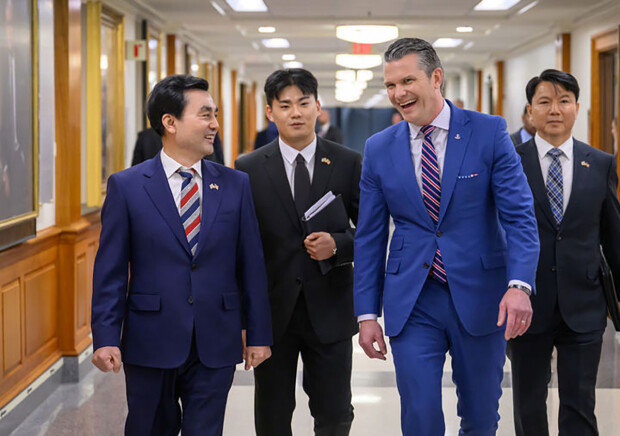
South Korean Defense Minister Ahn Gyu-back said Tuesday that Seoul and Washington broadly agree on the need to speed up the transfer of wartime operational control, or OPCON, but acknowledged lingering differences with the United States over how and when the transition should take place.
Speaking about his meeting a day earlier with U.S. Defense Secretary Pete Hegseth, Ahn said, “There are some areas where the U.S. side has slightly different views.” He added that Seoul would continue seeking understanding and cooperation from Washington where needed. His comments suggested the allies remain apart on both the timeline for the transfer and the question of whether all necessary conditions have been met.
The South Korea-U.S. defense ministers’ meeting was arranged on relatively short notice at Seoul’s request. Ahn described it as a communication-focused meeting rather than a venue for formal agreements or detailed negotiations on pending issues. Even so, the talks drew considerable attention because they came after a series of recent frictions between the allies, including disputes over intelligence-sharing restrictions and delays in security consultations linked to controversy surrounding Coupang. Some observers say the meeting produced few tangible results and instead highlighted the differences between Seoul and Washington over OPCON transfer.
The urgency surrounding Ahn’s visit also appeared linked to recent remarks by Xavier Brunson, commander of United States Forces Korea, who referred to the first quarter of 2029 as a possible timeline for the transition. The Lee Jae-myung administration has sought to complete the transfer before 2028, wary that a handover in early 2029 could become vulnerable to political shifts following the next U.S. presidential election.
What Seoul intended as an effort to accelerate the process may instead have exposed how far apart the two sides still are. Washington also used the meeting to press for greater South Korean cooperation in the conflict involving Iran. In opening remarks before the talks, Hegseth said U.S. allies were expected to stand shoulder to shoulder with Washington, comments widely interpreted as a call for South Korean participation in operations aimed at keeping the Strait of Hormuz open.
Ahn responded cautiously, indicating that Seoul could consider phased contributions ranging from diplomatic support and personnel dispatches to intelligence sharing and logistical or military assistance. Still, Washington’s requests tied to the Iran conflict appeared to add to an already expanding list of alliance-related demands facing Seoul.
Last year, the South Korea-U.S. alliance agreed on an “alliance modernization” framework centered on expanding South Korea’s role in leading defense operations against North Korean threats while increasing the strategic flexibility of U.S. Forces Korea. As part of that agreement, Seoul pledged to increase defense spending and strengthen key military capabilities in preparation for OPCON transfer.
As Ahn emphasized, the transfer of wartime operational control is ultimately a political and strategic decision to be made by the leaders of both countries. But political will alone cannot determine the timing if the necessary military capabilities are not yet fully in place. The more aggressively Seoul pushes to accelerate the transition, the greater the likelihood that Washington’s demands will continue to grow.








 About Dong-A Ilbo