

Seoul pushes to accelerate OPCON transfer
Seoul pushes to accelerate OPCON transfer
Posted May. 14, 2026 08:41,
Updated May. 14, 2026 08:41
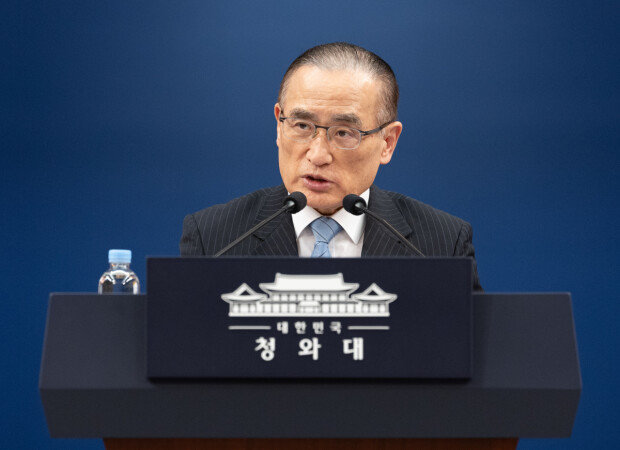
National Security Adviser Wi Sung-lac said Wednesday that the government plans to complete a roadmap this year for the transfer of wartime operational control, or OPCON, from the United States to South Korea, underscoring the Lee Jae-myung administration’s determination to move the process forward during its term.
The presidential office is aiming to set a timeline for the transfer after completing the second stage of the allies’ three-phase verification process, known as Full Operational Capability, or FOC, later this year.
Speaking at a forum hosted by the Korea Editors Association, Wi said South Korean and U.S. defense officials are working toward an early transfer of wartime operational control. His remarks suggested Seoul hopes to settle on a timetable at the annual South Korea-U.S. Security Consultative Meeting, scheduled for October in the United States.
Differences remain, however, over how quickly the transition should proceed, with Washington continuing to stress that the required military conditions must be met before the handover can take place. Analysts say the issue is emerging as a key point of negotiation between the allies.
Last month, Xavier Brunson, commander of United States Forces Korea, told the U.S. House Armed Services Committee that he had submitted a roadmap to the Pentagon aimed at meeting the conditions for OPCON transfer by the second quarter of fiscal 2029, which corresponds to the first quarter of 2029 in South Korea.
Seoul, however, believes the process needs to move more quickly if the transfer is to be completed within Lee’s single five-year term.
After meeting with U.S. Defense Secretary Pete Hegseth, South Korean Defense Minister Ahn Gyu-back told reporters in Washington on Tuesday that Hegseth supports a conditions-based OPCON transfer and hopes the process can move ahead swiftly.
Ahn added, however, that the U.S. side holds “somewhat different views” on parts of the issue, indicating the two countries have yet to fully align on the pace and conditions of the transfer.
Wi later said South Korea and the United States each have their own timeline for the transition process. He added that while there may be differences over some conditions, he does not believe the gap between the two sides is particularly large.
Kyu-Jin Shin newjin@donga.com







 About Dong-A Ilbo