

Trump tariff policy faces another legal setback
Trump tariff policy faces another legal setback
Posted May. 09, 2026 07:38,
Updated May. 09, 2026 07:38
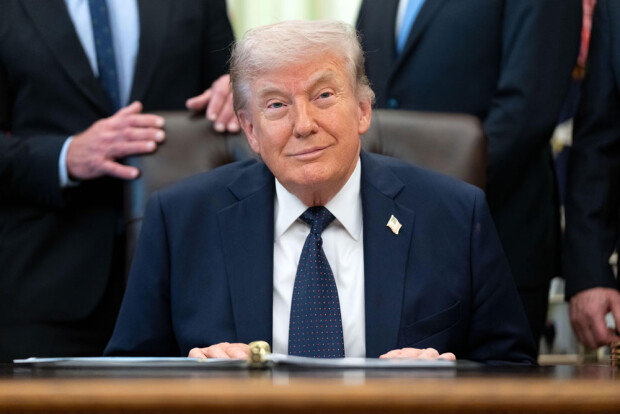
A U.S. federal court on Thursday struck down the Trump administration’s “global tariffs” imposed under Section 122 of the Trade Act, delivering another setback to President Donald Trump’s hard-line trade policy. The ruling followed a February decision by the U.S. Supreme Court that invalidated the administration’s reciprocal tariffs imposed under the International Emergency Economic Powers Act, or IEEPA. The latest decision now threatens the replacement tariff regime the White House introduced afterward.
The ruling came as tensions between the United States and Iran flared in the Strait of Hormuz, one of the world’s most important oil shipping lanes. Although Trump said a declaration formally ending the conflict could come within a week, prospects for even a temporary ceasefire appeared increasingly uncertain. Analysts said the combination of legal defeats over Trump’s tariff policy and the risk of a prolonged confrontation with Iran has intensified pressure on the second Trump administration.
A three-judge panel at the U.S. Court of International Trade ruled 2-1 that the administration’s global tariffs violated federal law and were therefore invalid. After the Supreme Court ruled in February that reciprocal tariffs imposed under the IEEPA were unlawful, Trump quickly turned to Section 122 of the Trade Act, using it to impose a 10% tariff on imports from countries around the world.
The trade court, however, said Section 122 permits tariffs only when the United States faces “large and serious balance-of-payments deficits.” The judges found that the administration’s justification based solely on a standard trade deficit did not satisfy that requirement. The New York Times described the ruling as “another legal blow” to the White House’s attempt to wage a trade war without explicit congressional approval.
Some analysts said the ruling may not immediately affect South Korea-U.S. trade relations or other economies. The court declined to extend the decision beyond the two U.S. importers that filed the lawsuit. In addition, tariffs imposed under Section 122 are limited to 150 days, and the Trump administration has already been preparing alternative measures under Section 301 of the Trade Act.
Separately, U.S. Central Command said three U.S. Navy destroyers transiting the Strait of Hormuz came under attack from Iranian forces before striking Iranian missile launch sites, command centers and intelligence facilities. Iran’s state-run IRIB broadcaster, meanwhile, claimed U.S. forces attacked an Iranian oil tanker and said Iranian missile strikes later damaged enemy vessels in the strait, forcing them to retreat.
Jin-Woo Shin niceshin@donga.com

![스쿼트 개수는 ‘하체 나이’ 지표… 연령별 기준 몇 개?[노화설계]](https://dimg.donga.com/c/138/175/90/1/wps/NEWS/IMAGE/2026/05/08/133884776.3.jpg)





 About Dong-A Ilbo