

Iran strikes Gulf gas sites as tensions rise
Iran strikes Gulf gas sites as tensions rise
Posted March. 20, 2026 08:59,
Updated March. 20, 2026 08:59
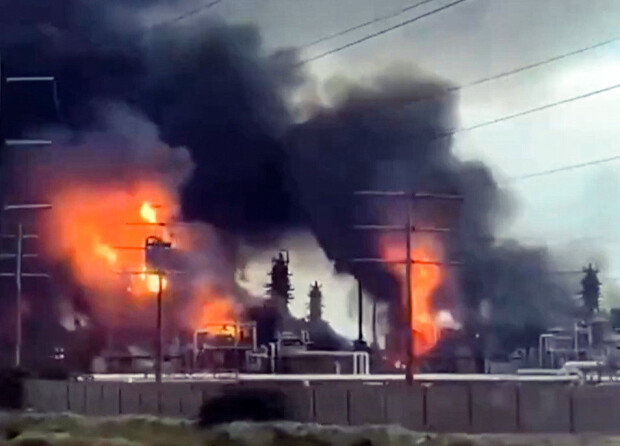
Iran struck key liquefied natural gas facilities in Qatar and the United Arab Emirates on March 18 and 19 local time, carrying out a second straight day of attacks. The strikes came in swift retaliation after Israel targeted Iran’s largest natural gas field. As the conflict among the United States, Israel and Iran spreads beyond military targets to critical energy infrastructure, concerns are growing that the surge in global oil prices, initially triggered by disruptions in the Strait of Hormuz, will persist. Analysts also warn that production and distribution of crude oil and natural gas could face deeper disruptions. Brent crude futures rose above $110 a barrel on the day, highlighting the sharp escalation in energy prices.
According to Reuters and other reports, Iran launched a second consecutive day of strikes on the Ras Laffan LNG complex, located about 70 kilometers north of Doha. The Qatari government said the missile attack hit a key national gas facility, sparking a fire and causing extensive damage, though no casualties were reported. Qatar accounts for about 20 percent of global LNG supply, and Ras Laffan serves as the central hub for the country’s gas production and processing, widely seen as the backbone of its economy. Doha condemned the strike as a direct threat to national security and ordered the expulsion of Iranian diplomats.
On the same day, natural gas facilities in the United Arab Emirates were also struck by what authorities described as likely Iranian missile attacks, forcing a halt in operations. Officials said debris fell on the Habshan gas processing plant, one of the largest of its kind in the world, as well as the Bab oil field, prompting their shutdown.
The strikes on Qatar and UAE gas facilities followed Israeli attacks a day earlier on Iran’s South Pars gas field, which accounts for about 70 percent of the country’s gas output, and a nearby refining facility in Asaluyeh. Iranian state media reported that operations at phases three through six of the South Pars field were suspended due to fires caused by the strikes, and that the Pars Special Economic Energy Zone in Asaluyeh also sustained damage.
In response, Iran’s Islamic Revolutionary Guard Corps warned it would continue targeting energy infrastructure across the Gulf region, including in Qatar, the UAE and Saudi Arabia, until such facilities are completely destroyed. Iranian President Masoud Pezeshkian also warned that attacks on energy infrastructure could trigger uncontrollable consequences.
As the economic fallout intensified, with global oil prices surging, U.S. President Donald Trump called for restraint. In a post on Truth Social, Trump said Israel would refrain from further strikes on the South Pars facility as long as Iran does not attack Qatar, urging both sides to avoid further escalation targeting energy infrastructure. He also said the United States had no prior knowledge of the specific strike on Iran’s South Pars gas field.
Keun-Hyung Yoo noel@donga.com








 About Dong-A Ilbo