

Lee signals tougher taxes and loans on property
Lee signals tougher taxes and loans on property
Posted February. 28, 2026 08:40,
Updated February. 28, 2026 08:40
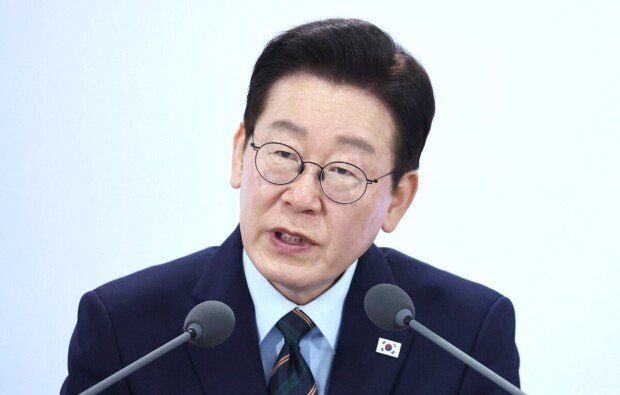
President Lee Jae-myung’s pledge to mobilize all available policy tools against not only multiple-home owners but also single-home owners who retain properties for investment or speculative purposes is widely interpreted as a renewed signal of his intent to refocus the housing market on end users while advancing tough regulatory measures. Market observers expect the government to introduce a broad package of tax and financial steps in tandem, such as increasing the comprehensive real estate holding tax on multiple-home owners, limiting long-term holding deductions for single-home owners who do not reside in their properties and tightening lending regulations.
Lee wrote on X on Wednesday, “Various regulations and burdens will be calibrated in detail based on whether a home is used for actual residence, the number of homes owned, the price level, the type of regulation and regional characteristics, with a basic focus on a single home for residential purposes.” He added that the system would be structured to actively safeguard ordinary residential use while decisively curbing homes used for investment or speculation.
The government is also reviewing possible changes to the long-term holding deduction applied to capital gains tax. On Jan. 23, Lee Jae-myung wrote on X, "If a single home is not used for residence but for investment or speculation, it seems unreasonable to grant tax reductions simply because it was held for a long period.”
Under the current system, a single-home owner who sells a property may receive a capital gains tax deduction of up to 40 percent based on the holding period and up to 40 percent based on the period of residence, for a combined maximum of 80 percent. Multiple-home owners are eligible for a deduction of up to 30 percent. Authorities are weighing a substantial reduction in the holding-period portion of the deduction or excluding multiple-home owners entirely. If implemented, those who purchase homes without living in them would likely struggle to qualify for the benefit.
Another option under review is raising the property value realization rate or the fair market value ratio used to calculate holding taxes. At present, housing holding taxes are assessed by multiplying the government-assessed property value by the fair market value ratio to determine the tax base. This year, the realization rate for publicly announced apartment prices stands at about 69 percent of market value. Increasing that rate to roughly 80 percent to 90 percent, or gradually lifting the fair market value ratio, which was lowered from 95 percent to 60 percent under the previous administration, would immediately raise the holding tax burden.
An increase in the comprehensive real estate holding tax rate for multiple-home owners and a reduction in the basic deduction threshold are also being discussed. In 2022, the government raised the basic deduction threshold to 1.2 billion won for single-home owners and 900 million won for two-home owners, and applied the standard tax rate to those owning up to two homes. Should regulations be tightened, the tax burden on multiple-home owners could increase sharply.
Lending rules are also set to become more restrictive. Financial authorities plan to reduce the loan-to-value ratio for homes that are not owner-occupied and to tighten standards for extending loan maturities for multiple-home owners. Banks could also be required to evaluate the rent-to-interest ratio, which measures annual rental income against interest payments, when reviewing requests to extend loan terms for borrowers with multiple properties.
세종=정순구 soon9@donga.com



![[김순덕 칼럼]황당 X에 잡힌 李, 대통령 주변이 단단히 고장났다](https://dimg.donga.com/c/138/175/90/1/wps/NEWS/IMAGE/2026/04/15/133748626.1.jpg)



 About Dong-A Ilbo