

Pyongyang to hold ninth Workers’ Party congress
Pyongyang to hold ninth Workers’ Party congress
Posted February. 09, 2026 08:28,
Updated February. 09, 2026 08:28
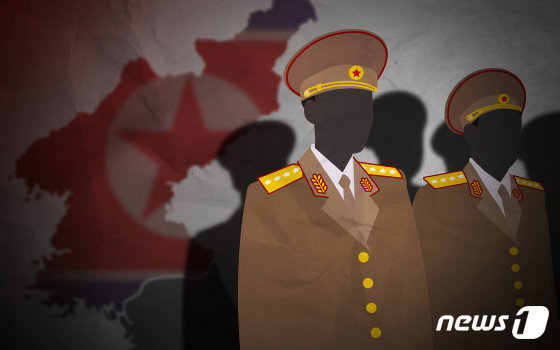
North Korea will convene its ninth Workers’ Party Congress in late February, a high-level meeting expected to set the nation’s course for the next five years and define its policy approach toward South Korea and the United States. The congress is widely viewed as a potentially pivotal moment for the future of the Korean Peninsula.
According to North Korea's state -run Korean Central News Agency on Feb. 8, the decision was reached at a Politburo meeting held a day earlier at the Workers’ Party Central Committee headquarters, under the guidance of State Affairs Commission Chairman Kim Jong Un. The session marked the 27th meeting of the eighth Central Committee’s Politburo and formally approved plans to hold the party congress in Pyongyang later this month.
The Politburo also endorsed procedures for reviewing delegate qualifications, proposals for the composition of the executive bureau, presidium and secretariat, and a package of documents to be submitted for deliberation at the congress. While Pyongyang has yet to announce specific dates, the gathering is expected to begin after events commemorating the birthday of former leader Kim Jong Il on Feb. 16, one of North Korea’s most significant political anniversaries.
Held every five years, the party congress is North Korea’s most important political gathering. It functions as a forum to assess accomplishments from the previous five years and to adopt new five-year development plans covering national defense, the economy and the broad direction of foreign policy.
Amid speculation that North Korea-U.S. dialogue could resume around U.S. President Donald Trump’s planned visit to China in April, Pyongyang’s message toward Washington is expected to remain cautious. Koh Yu-hwan, former president of the Korea Institute for National Unification, said North Korea is unlikely to pursue talks based on denuclearization and will instead reaffirm its long-standing stance of managing relations with the United States on what it calls an equal footing as a nuclear-armed strategic state. Analysts note, however, that continued signals from Washington, such as approving exemptions from U.N. Security Council sanctions for humanitarian assistance, could prompt Pyongyang to send a more forward-looking message.
North Korea’s posture toward South Korea is expected to remain largely unchanged, continuing to define inter-Korean relations as those between hostile states. In particular, the concept of “two hostile states,” declared by Kim in December 2023, could be formally incorporated into the party charter and the state constitution at the ninth party congress or at a subsequent session of the Supreme People’s Assembly. Such a move would likely entail removing references to “unification” and “nation” from official documents and explicitly redefining inter-Korean relations as state-to-state relations.
Some observers have also pointed to the possibility of steps aimed at further entrenching Kim’s monolithic leadership system. Such moves could include reviving a presidential title or advancing elements of a succession framework involving his daughter, Ju Ae. At the eighth Workers’ Party congress in 2021, Kim was elevated to general secretary, the party’s top post, consolidating his authority within the ruling structure.
At the upcoming congress, North Korea is also expected to present a formal assessment of defense and economic policies over the past five years and to introduce a new five-year development plan. In the defense sector, analysts anticipate a renewed emphasis on the parallel advancement of nuclear capabilities and conventional forces. Lim Eul-chul, a professor at Kyungnam University’s Institute for Far Eastern Studies, said the congress is likely to serve as a platform for declaring what Pyongyang describes as a leap toward “comprehensive socialist development,” framing the country as a nuclear-armed state that has also addressed the population’s basic livelihood needs.






 About Dong-A Ilbo