

U.S. signals pressure on Iran via military presence
U.S. signals pressure on Iran via military presence
Posted February. 09, 2026 08:29,
Updated February. 09, 2026 08:29
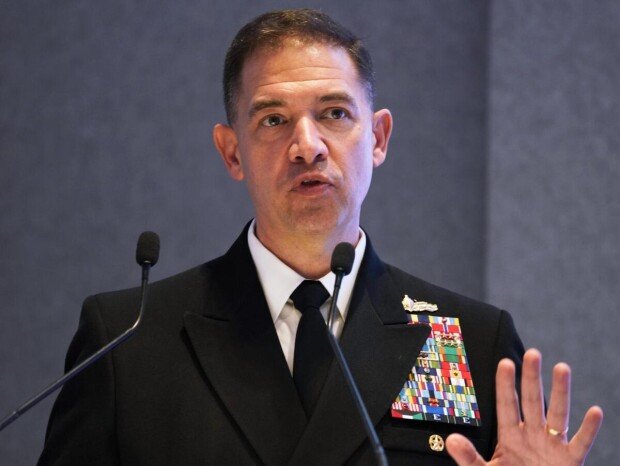
High-level nuclear talks between the United States and Iran took place Feb. 6 at a palace in Muscat, Oman. Amid delegations mostly dressed in business attire, U.S. Army Gen. Brad Cooper, 59, commander of U.S. Central Command, drew attention by wearing a full naval-style dress uniform. Cooper has led Central Command, which oversees U.S. military operations in the Middle East, since August of last year.
Since assuming command, Cooper has visited key Middle Eastern countries, including Israel, supporting U.S. President Donald Trump’s military strategy of “peace through strength.” A veteran of the Iraq and Afghanistan wars, Cooper attended the talks alongside Steve Witkoff, the White House special envoy for the Middle East, and Jared Kushner, the president’s eldest son-in-law and former senior White House adviser.
Cooper’s military uniform was widely interpreted as a strong warning from Washington to Tehran. Analysts said it signaled that the United States is prepared to use force if Iran remains uncooperative in nuclear negotiations or continues its violent crackdown on anti-government protests. In a related move, Witkoff and Kushner boarded the aircraft carrier Abraham Lincoln strike group, deployed in nearby Middle Eastern waters on Feb. 7, to meet and encourage U.S. service members.
President Trump also intensified economic pressure on Iran, signing an executive order Feb. 6 that imposes an additional 25 percent tariff on goods exported to the United States by third countries that trade with Tehran. The move was widely interpreted as an effort to apply both military and economic pressure during negotiations. Trump warned that the consequences would be severe if Iran fails to reach an agreement, though he did not specify which products would be targeted.
Iran, however, reaffirmed its longstanding stance that it will not abandon uranium enrichment. Iranian Foreign Minister Abbas Araghchi told Al Jazeera on Feb. 7 that uranium enrichment is an “inalienable right” of Iran and asserted that U.S. airstrikes could not destroy the country’s enrichment capabilities. Iran reportedly restored significant portions of three nuclear facilities targeted in U.S. air raids in June last year. Araghchi said Tehran remains willing to hold further talks with Washington in the near future.
Separately, Trump has deployed senior military figures, including Cooper, to mediation efforts aimed at ending the war in Ukraine. U.S. Army Secretary Dan Driscoll participated in talks between Russia and Ukraine on Feb. 4 and 5 in Abu Dhabi, United Arab Emirates.
Driscoll, a former armored officer who served in Iraq, has been involved in negotiations to end the Ukraine war since November last year. The Associated Press reported that he has become a key intermediary between the Ukrainian government and members of the second Trump administration, including Witkoff and Kushner. He is said to convey the positions of Ukraine and major European countries to an administration widely seen as relatively sympathetic to Russia.
The AP noted that this approach departs from the Republican Party’s traditional practice of assigning major diplomatic negotiations to career diplomats. Instead, it reflects Trump’s distinctive strategy of prioritizing personal loyalty, relying on close associates over professional diplomats. At the same time, concerns remain that Trump undervalues experienced diplomats and depends too heavily on the military to manage foreign policy.
Keun-Hyung Yoo noel@donga.com

![[사설]“尹 계엄 하려 北 도발 유도”… 무지한 건지, 무모한 건지](https://dimg.donga.com/c/138/175/90/1/wps/NEWS/IMAGE/2026/06/12/134104085.1.jpg)


 About Dong-A Ilbo