

U.S. affirms support for Japan over Taiwan tensions
U.S. affirms support for Japan over Taiwan tensions
Posted November. 22, 2025 07:16,
Updated November. 22, 2025 07:16
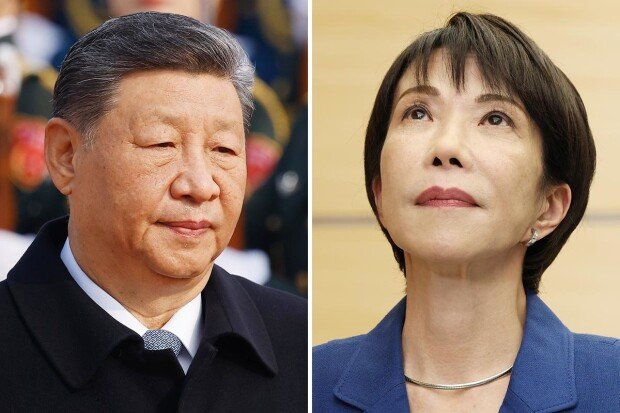
Japanese Prime Minister Sanae Takaichi marked her first month in office on Nov. 21, as tensions between China and Japan escalated over her remarks about potential Japanese involvement in a Taiwan contingency.
Amid the growing dispute, the U.S. State Department on Nov. 20 reaffirmed its support for Japan, saying, “Our commitment to the U.S.-Japan alliance and Japan’s defense, including the Senkaku Islands, remains unwavering.” This statement made clear that the United States would defend the Senkaku Islands in the East China Sea, which Japan administers but China claims.
The State Department also emphasized the need for trilateral cooperation among South Korea, the United States, and Japan to address challenges in the Indo-Pacific, including the Chinese Communist Party’s revisionism and a hostile North Korea. Analysts say that with the Trump administration’s second term siding with Japan in the China-Japan dispute, the U.S. may also seek a role for its ally South Korea. Observers note that the Lee Jae-myung administration’s pragmatic diplomacy, which seeks to strengthen ties with China while maintaining the U.S.-South Korea alliance as a core pillar, faces increased pressure. The United States has repeatedly urged South Korea to participate in countering China, particularly after approving a nuclear-powered submarine.
U.S. State Department spokesperson Tommy Piggott mentioned the Senkaku Islands on Nov. 20 on X, stating that Washington opposes any unilateral attempts to change the status quo in the Taiwan Strait, the East China Sea, or the South China Sea. On the same day, U.S. Ambassador to Japan George Glass met with Japanese Foreign Minister Toshimitsu Motegi. Glass described China’s ban on Japanese seafood imports and advisories against travel and study in Japan as “typical economic coercion” and pledged, “We will support Japan.” He also criticized Chinese Consul General Xue Jian in Osaka, who referenced beheading Takaichi, calling the remark “outrageous.”
Taiwan President Lai Ching-te posted a photo on Facebook on Nov. 20 showing himself eating sushi made with Japanese seafood, indirectly criticizing China’s restrictions. Takaichi said on Nov. 21 that she had no intention of retracting her remarks.
Russia and North Korea have expressed support for China. Chinese state media CCTV reported on Nov. 20 that Russian Foreign Ministry spokesperson Maria Zakharova called Takaichi’s remarks “very dangerous” and stressed that Taiwan is part of China’s internal affairs. North Korea also voiced support on Nov. 18, saying, “Japan is denying and distorting its historical crimes.”
Jin-Woo Shin niceshin@donga.com

![[속보]트럼프 “이란과 14일 합의 서명”…혁명수비대 “절대 없을 것”](https://dimg.donga.com/c/138/175/90/1/wps/NEWS/IMAGE/2026/06/14/134105551.1.jpg)




 About Dong-A Ilbo