

Special counsel seeks sentence in Yoon insurrection case
Special counsel seeks sentence in Yoon insurrection case
Posted January. 09, 2026 09:13,
Updated January. 09, 2026 09:13
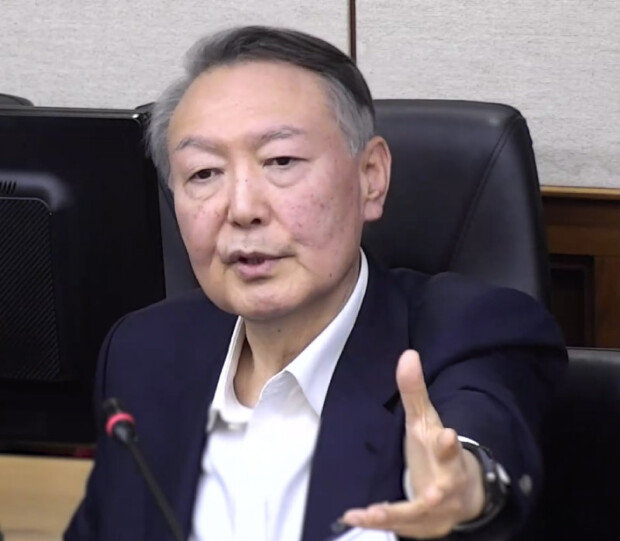
A special counsel is scheduled to submit a sentencing recommendation on Jan. 9 in a case accusing former President Yoon Suk Yeol of serving as the ringleader of an insurrection tied to the Dec. 3 declaration of martial law. The case marks the first time in nearly three decades that prosecutors have formally evaluated insurrection charges against a former president. The last such case involved Chun Doo-hwan, who was prosecuted on charges of insurrection and maintaining secret slush funds. A first-instance court ruling on Yoon’s case is expected next month, following the sentencing recommendation.
● Chun insurrection trial led to death sentence, later reduced to life imprisonment
The Seoul Central District Court’s Criminal Division 25 will hold the final hearing in Yoon’s case on Jan. 9. The hearing comes 348 days after Yoon was arrested and indicted on Jan. 26 last year. On the same day, the court is also set to conclude trials involving seven senior military and police officials accused of playing key roles in the alleged insurrection. Those defendants include former Defense Minister Kim Yong-hyun and former National Police Agency Commissioner Cho Ji-ho.
At the hearing, the special counsel is expected to present its sentencing recommendation for Yoon, after which each defendant will deliver a final statement. Under South Korea’s Criminal Act, the offense of leading an insurrection carries only three statutory penalties: death, life imprisonment, or life imprisonment with labor. Because the law allows no lesser punishment, the special counsel must choose one of those options. Prosecutors rarely seek a sentence below the range explicitly prescribed by statute.
The court, however, retains discretion to reduce the sentence through mitigation. Judges may grant mitigation if a defendant admits guilt, expresses remorse, or if the harm caused by the crime is deemed limited. If the court initially selects the death penalty and then applies mitigation, it must instead impose either life imprisonment or a prison or labor term of 20 to 50 years. If the court selects life imprisonment or life imprisonment with labor and subsequently mitigates the sentence, it must impose a fixed term of 10 to 50 years. As a result, even when mitigation is applied, a conviction for leading an insurrection carries a mandatory minimum sentence of 10 years in prison or labor. A suspended sentence is not allowed.
In South Korea’s constitutional history, the only case in which a sentence was imposed for the crime of leading an insurrection involved former President Chun Doo-hwan, stemming from the Dec. 12 military coup. The court is therefore expected to take that precedent into account when determining Yoon’s sentence.
At Chun’s first trial in 1996, prosecutors sought the death penalty on charges that included leading an insurrection and murder for the purpose of insurrection, and the court accepted the request. On appeal, the sentence was reduced to life imprisonment, a decision later upheld by the Supreme Court sitting en banc. Former President Roh Tae-woo, who was tried alongside Chun and convicted of playing a key role in the insurrection, ultimately received a 17-year prison sentence. Prosecutors had sought life imprisonment for Roh, while the trial court initially sentenced him to 22 years and six months.
Some observers caution against drawing a direct parallel between the current case and Chun’s. They note that the Dec. 3 declaration of martial law resulted in no casualties and was relatively short-lived. A senior judge said the central issue is whether the incident should be viewed as comparable to the military coup carried out by the new military leadership in 1979. If it is not, the judge said, the final sentence is likely to fall short of the statutory maximum.
● Special counsel weighs sentence until final stage
The special counsel held a series of internal meetings through Jan. 8 to finalize its sentencing recommendation. According to reports, some members of the team argued that there were few grounds for mitigation, pointing to Yoon’s lack of remorse and his tendency to shift responsibility onto subordinates. The special counsel also debated whether to explain the reasoning behind each defendant’s recommended sentence individually or to present all sentencing recommendations collectively at the conclusion of the hearing. An official from the special counsel’s office said the discussions reflected concerns that Yoon’s supporters could attempt to disrupt proceedings when the recommendation is announced.
As the trial neared its conclusion, Yoon continued to maintain that the declaration of martial law was intended merely as a warning. He also placed blame on Cabinet members and aides, arguing that they failed to caution him about the potential political backlash. At a hearing held on Jan. 5, Yoon said that if the prime minister or Cabinet members had exercised even minimal political judgment, they should have warned the president that declaring martial law could provoke counterattacks from the opposition. He added that no such advice was offered.
송혜미 1am@donga.com


![[김순덕 칼럼]이 대통령은 왜 ‘탄핵 가능성’을 언급했을까](https://dimg.donga.com/c/138/175/90/1/wps/NEWS/IMAGE/2026/06/17/134133459.1.jpg)
![[단독]선관위, 결재없이 55억 써도 고작 견책…‘자체 징계’ 솜방망이](https://dimg.donga.com/c/138/175/90/1/wps/NEWS/IMAGE/2026/06/19/134138827.4.jpg)


 About Dong-A Ilbo