

Trump orders U.S. withdrawal from 66 global bodies
Trump orders U.S. withdrawal from 66 global bodies
Posted January. 09, 2026 09:13,
Updated January. 09, 2026 09:13
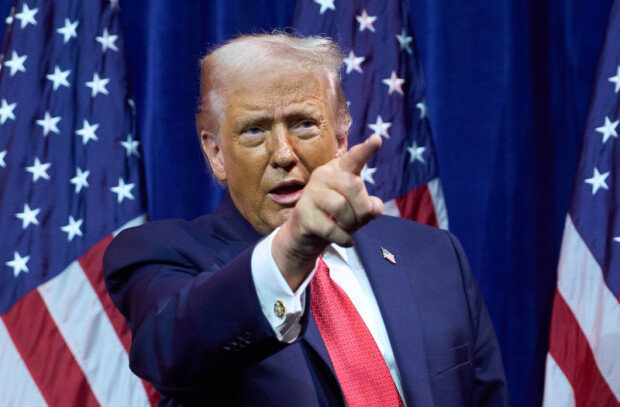
U.S. President Donald Trump, on Jan. 7 local time, signed a memorandum directing the United States to withdraw from a total of 66 international organizations. The list includes 31 United Nations bodies, such as the U.N. Framework Convention on Climate Change and the U.N. Conference on Trade and Development, as well as 35 non-U.N. international organizations. In an accompanying explanatory document, the White House said the withdrawals are intended to reduce taxpayer spending and redirect resources toward “America First” priorities. The administration said the savings would be used for defense, infrastructure projects and efforts to curb illegal immigration.
The decision is also widely seen as a step back from the multilateral system the United States helped establish after World War II. Since taking office in January last year, the Trump administration has sought to dismantle or weaken long-standing frameworks not only in international trade and security but also in broader areas of global cooperation. Analysts say the move reflects Trump’s preference for exerting pressure through strength and securing tangible gains through bilateral negotiations, in line with his expansionist policy approach.
● Trump exits international bodies tied to climate change and immigration
The White House said the president is ending participation in international organizations that weaken U.S. independence, operate inefficiently and waste taxpayer money on agendas hostile to the United States. It argued that many of the targeted organizations promote climate policies and initiatives linked to progressive ideology, which it said conflict with U.S. sovereignty and economic capacity. All federal departments and agencies were instructed to halt participation in and funding for these bodies.
According to the White House, the organizations affected are tied to issues Trump has long criticized, including climate change, labor, immigration and support for developing countries. Several are also linked to diversity, equity and inclusion policies and political correctness, which Trump has frequently cited when criticizing the Joe Biden administration and others.
One prominent example is the U.N. Framework Convention on Climate Change, which supports developing countries’ responses to climate change. The Associated Press described the move as Trump’s latest step to distance the United States from international organizations that prioritize climate action. Trump withdrew from the Paris climate accord during his first term. Although former President Joe Biden rejoined the agreement, Trump decided to withdraw again immediately after returning to office. He also skipped the 30th U.N. Climate Change Conference of the Parties held in Belem, Brazil, in November last year.
U.S. support for the U.N. Population Fund, which oversees programs related to sexual and reproductive health, will also be suspended. Trump and some members of the ruling Republican Party have accused the agency of involvement in forced abortions in countries including China.
Trump has consistently pursued withdrawals from international organizations since his first term. After returning to office in January last year, he sharply cut U.S. funding for the United Nations and ended participation in the U.N. Human Rights Council. The United States has also withdrawn from UNESCO, the World Health Organization and the U.N. Relief and Works Agency for Palestine Refugees.
● Additional withdrawals under review
The White House said the move is part of a comprehensive review of all international intergovernmental organizations, agreements and treaties, signaling that additional withdrawals remain possible. Trump said his own assessment is ongoing following further reviews by Secretary of State Marco Rubio, suggesting that more exit decisions may already be in motion.
Trump has long expressed skepticism toward multilateral institutions centered on the United Nations, repeatedly questioning their relevance and effectiveness. In a speech to the 80th U.N. General Assembly last September, marking the organization’s 80th anniversary, he criticized the United Nations as incompetent and filled with empty rhetoric. Reuters has reported that Trump has consistently raised concerns about the effectiveness, accountability and funding structures of international organizations.
Some analysts note that the latest decision differs from Trump’s earlier withdrawals, which targeted a limited number of symbolically significant bodies. Exiting dozens of international organizations at once as a single package is widely viewed as an unusual and far more sweeping step.
The decision is also widely seen as consistent with Trump’s broader push to expand U.S. influence. It follows a series of actions targeting multiple Western Hemisphere countries, including Greenland, a Danish territory, as well as Cuba, Colombia and Mexico, after the ouster of Venezuelan President Nicolas Maduro. Observers say the move highlights Trump’s intent to weaken a multilateral order built on shared norms and replace it with a system driven by power-based bargaining.
At the same time, concerns are mounting that large-scale withdrawals from international organizations could leave gaps in health and humanitarian programs in developing countries. Critics warn that such disruptions could increase global instability and, in the long run, impose a heavier burden on the United States itself.
Jin-Woo Shin niceshin@donga.com








 About Dong-A Ilbo