

USFK redeployment under discussion by Seoul, Washington
USFK redeployment under discussion by Seoul, Washington
Posted March. 05, 2026 07:49,
Updated March. 05, 2026 07:49
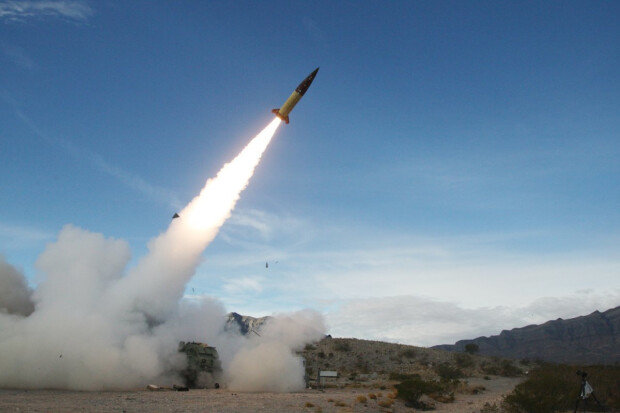
As the war between the United States and Iran spreads across the Middle East, Seoul and Washington are reportedly consulting on the possible redeployment of U.S. Forces Korea assets. If the conflict becomes protracted, key systems stationed on the Korean Peninsula, including ATACMS tactical surface-to-surface missiles, could be dispatched to the Middle East to help offset potential U.S. ammunition shortages.
According to government sources on Tuesday, the two allies have been discussing U.S. munitions requirements following American airstrikes on Iran. With indications that the crisis may be drawn out and demand for ammunition rising, the talks are widely interpreted as a review of whether U.S. forces deployed outside the area overseen by U.S. Central Command could be repositioned to support operations against Iran. In an interview with The New York Times on Sunday local time, U.S. President Donald Trump said military operations could continue for four to five weeks.
Earlier, a senior presidential official in Seoul said Monday that it was difficult to disclose specifics regarding consultations over the operation of U.S. Forces Korea assets in light of the Middle East situation, but confirmed that discussions are underway. The official added that both sides are coordinating closely to ensure the combined defense posture remains intact.
Among the assets under consideration for potential redeployment are multiple launch rocket systems. The M270 MLRS operated by U.S. Forces Korea can fire ATACMS missiles with a range of up to 300 kilometers, as well as rockets capable of striking targets several dozen kilometers away.
The possible transfer of air defense capabilities, including Patriot and Terminal High Altitude Area Defense batteries, has also been raised. However, some of the two Patriot batteries that were rotationally deployed from South Korea to the Middle East ahead of U.S. airstrikes on Iranian nuclear facilities last year are reportedly still stationed there.
Separately, the United Arab Emirates, which has come under Iranian attack, has reportedly requested additional Cheongung-2 medium-range surface-to-air interceptor missiles from South Korea. Iran has continued missile and drone strikes targeting U.S. bases in the region, including those in Israel, the UAE, and Saudi Arabia, following their involvement in U.S. military operations. The UAE signed a contract with South Korea in 2022 to acquire 10 Cheongung-2 batteries and is currently operating two.
Kyu-Jin Shin newjin@donga.com







 About Dong-A Ilbo