

North Korea fires missile after U.S. tightens sanctions
North Korea fires missile after U.S. tightens sanctions
Posted November. 08, 2025 07:19,
Updated November. 08, 2025 07:19
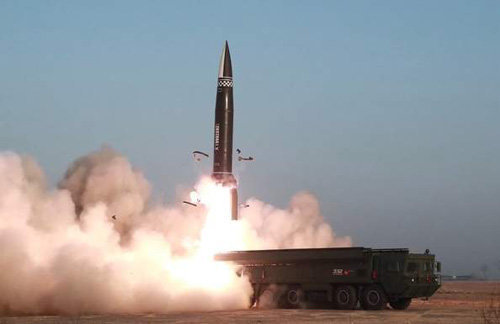
North Korea resumed provocations Thursday by launching a ballistic missile just 16 days after its previous test. The move is viewed as a show of force in response to the Trump administration’s tighter sanctions following the collapse of the North Korea-U.S. summit.
The Joint Chiefs of Staff said Thursday that they detected a projectile, presumed to be a short-range ballistic missile, launched from the Daegwan area in North Pyongan Province toward the East Sea at about 12:35 p.m. The launch violates United Nations Security Council resolutions banning North Korea’s ballistic missile activities. It is the second such provocation under the Lee Jae-myung administration, following a missile test on Oct. 22.
The missile launched Thursday is believed to be an upgraded version of the KN-23, often called the “North Korean Iskander,” developed for potential nuclear strikes across South Korea. It reportedly traveled about 650 kilometers, roughly the distance from Daegwan to Busan. Analysts said the launch appeared aimed at the USS George Washington, a U.S. Navy nuclear-powered aircraft carrier of the 7th Fleet that entered the South Korean naval operations base in Busan on Nov. 5.
Military officials said the provocation may have been a response to recent U.S. sanctions. On Nov. 4, the U.S. Treasury Department sanctioned eight North Korean nationals and two organizations accused of laundering funds obtained through cybercrimes. On the previous day, the State Department asked the United Nations to impose sanctions on seven foreign vessels suspected of transporting North Korean coal to China.
The National Security Office held an emergency National Security Council meeting Thursday with the Defense Ministry, Joint Chiefs of Staff, and other relevant agencies to evaluate the situation. Officials said the missile launch was immediately reported to the president.
Hyo-Ju Son hjson@donga.com






 About Dong-A Ilbo