

A Nativity grounded in human hardship
A Nativity grounded in human hardship
Posted December. 25, 2025 10:44,
Updated December. 25, 2025 14:08
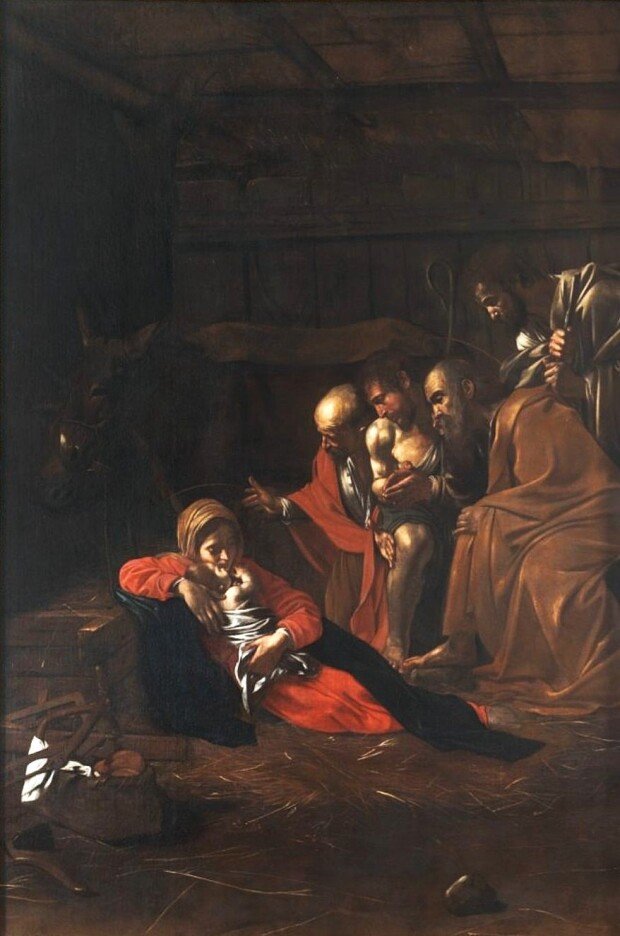
In the Christian cultural tradition, the birth of Jesus has long been a favored subject for painters. Nativity scenes are typically filled with light and glory, depicting angels descending from the heavens, the newborn Jesus radiating divinity, and the Virgin Mary idealized. In the 17th century, however, Italian painter Caravaggio decisively rejected this familiar imagery.
"The Adoration of the Shepherds" (1608–1609, photo) was commissioned by the Senate that governed Messina to adorn the altar of a church run by the Capuchin order. At the time, Caravaggio had fled Rome as a fugitive after being accused of murder and eventually arrived in Messina. Despite his controversial reputation, the city’s aristocracy recognized his talent and eagerly became his patrons.
The Nativity depicted by a painter living under constant anxiety is not a lavish celebration. In the painting, the Virgin Mary is not a celestial figure but a young mother exhausted by childbirth and travel. In a worn, humble stable, she lies partially on the ground, cradling the infant Jesus as if shielding him. Joseph, clad in a brown robe, and the shepherds watch the scene with quiet caution and reverence. The senatorial patrons may have expected their own faces to appear, but Caravaggio instead chose members of the laboring poor, people who lived lives marked by hardship and deprivation.
The light is subdued rather than majestic. A single, faint source illuminates only parts of the figures. Halos are barely visible, and angels are entirely absent.
Caravaggio portrays the Nativity not as a miraculous spectacle but as an event grounded in reality. He emphasizes that divinity is revealed not through light and grandeur but quietly, within the lowest conditions of human existence. Salvation, too, begins in the humblest place, in a protective gesture toward the most vulnerable, much like the hands of a mother lying on the ground. Perhaps the one who most desperately longed for that salvation was the painter himself, living a life on the run.







 About Dong-A Ilbo