

Brain-computer implants may become common within years
Brain-computer implants may become common within years
Posted September. 17, 2025 07:40,
Updated September. 17, 2025 07:40
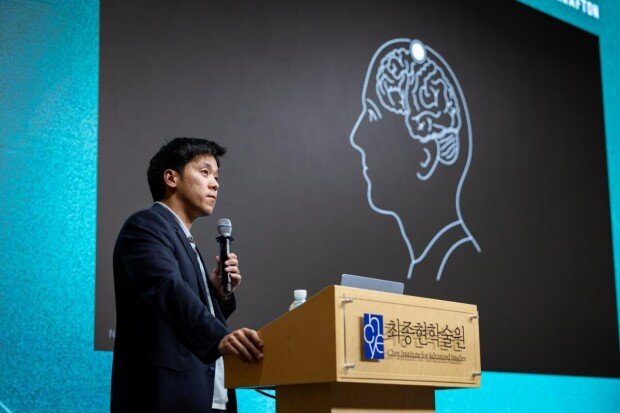
“Within the next three to four years, even healthy individuals could reach a ‘turning point’ and opt for a brain-computer interface implant,” said Suh Doo-jin, vice president of neuroscience startup Neuralink and co-founder alongside Tesla CEO Elon Musk, during a Sept. 15 lecture at the Korea Foundation for Advanced Studies in Gangnam, Seoul.
Brain-computer interface, or BCI, technology involves implanting electrodes into the brain to convert neural signals into electrical data that can be transmitted to computers. Currently, clinical use is limited to patients who have lost motor function due to injury or disease, but Suh predicts that healthy individuals may also undergo brain implants in the near future.
Suh is one of the eight scientists who co-founded Neuralink with Musk and is now the only remaining co-founder besides Musk. He moved to the United States as a child and earned a Ph.D. in electrical engineering and neuroscience from the University of California, Berkeley. In 2020, he was named one of the “35 Innovators Under 35” by the Massachusetts Institute of Technology’s Technology Review.
During a lecture co-hosted by the Choi Jong-Hyun Academic Foundation, the Korea Foundation for Advanced Studies, and Krafton, Suh shared Neuralink’s latest clinical cases. Arvo Norrland, an American paralyzed from the shoulders down in a diving accident, participated as Neuralink’s first clinical trial subject and was able to play chess using only his thoughts. Suh explained, “Participants use the device an average of seven hours and 40 minutes daily, with some using it over 100 hours a week, making it an essential tool in their lives.” According to Neuralink, 12 people have received Neuralink implants so far.
Suh also highlighted the potential for “superhuman” abilities, noting that Neuralink’s signal transmission is more than 10 times faster than the neural signals traveling from the spinal cord to muscles. In practice, users connected to the computer via Neuralink showed faster reaction times than non-users. “Our goal is to reduce human suffering while also expanding human experience,” Suh said. “Just as smartphones have expanded human creativity, brain-computer interface technology will inspire new forms of imagination.”
박종민기자 blick@donga.com







 About Dong-A Ilbo