

Iranians brace for war ahead of nuclear talks
Iranians brace for war ahead of nuclear talks
Posted February. 26, 2026 08:40,
Updated February. 26, 2026 08:40
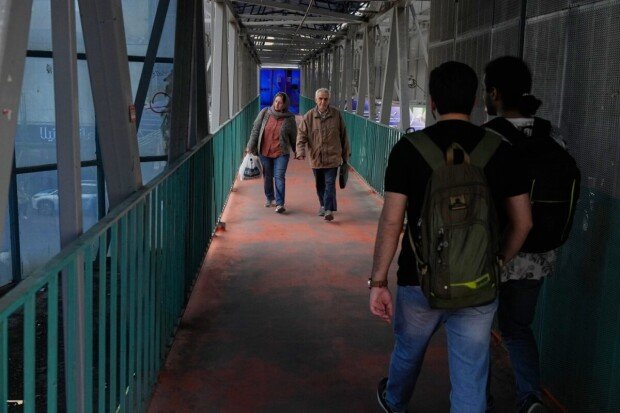
“Iranian citizens should prepare two weeks’ worth of food, medicine, fuel, candles, and flashlights.”
Ahead of the third round of nuclear talks between the United States and Iran, scheduled for Feb. 26 in Geneva, reports indicate that Iranians are increasingly preparing for the possibility of war if negotiations fail, the New York Times reported on Feb. 24. Many citizens are packing emergency bags and purchasing generators in anticipation of power outages. Social media has also seen a growing number of posts offering tips and strategies for coping with wartime conditions.
When Iran engaged in the so-called “12-day war” with the United States and Israel in June last year, many residents of Tehran fled air raids for the northern Caspian Sea coast and nearby mountainous areas. The mass movement caused severe traffic congestion across the country. Journeys that normally took four hours required a full day. Many Iranians now fear that a future conflict could be even more devastating than last year’s experience.
Sara, a Tehran resident and chemist, told the New York Times that fear of war was overwhelming. “I feel like I am losing my mind. I want to know how to escape this limbo,” she said. Businessman Amir added, “We are forced to think about survival on our own in a war against the world’s most powerful military. I could not leave my wife and children abroad, so I gave up a planned business trip.”
Another Tehran resident, Sahand, said that for low-income families, even preparing emergency bags is a luxury. “My family cannot afford to stockpile food or medicine. We can only think about where to hide,” he said. Public frustration is growing due to the lack of a clear emergency response plan from the Iranian government.
Meanwhile, White House spokeswoman Karoline Leavitt reiterated on Feb. 24 that the United States’ position remains to prioritize diplomacy but will not rule out military action if necessary. She said, “U.S. President Donald Trump’s first option is always diplomacy,” but added that he will not hesitate to employ the U.S. military’s lethal force if needed.
Leavitt emphasized that the final decision on military action always rests with the president, directly countering recent reports in The Washington Post that U.S. military leaders, including Joint Chiefs Chairman Dan Cain, opposed strikes on Iran.
On the same day, Iranian Foreign Minister Abbas Araghchi told social media platform X that the country is facing a historic opportunity to reach an unprecedented agreement that addresses mutual concerns and achieves shared benefits. He added that Iran will not give up its right to peaceful nuclear energy, directly challenging the United States.
오승준 기자 ohmygod@donga.com



![“코 스프레이 2번 뿌렸더니 기억력 쑥”…치매 치료 가능성 [노화설계]](https://dimg.donga.com/c/138/175/90/1/wps/NEWS/IMAGE/2026/05/29/134018314.3.jpg)



 About Dong-A Ilbo