

Court ends Homeplus rehabilitation
Court ends Homeplus rehabilitation
Posted July. 04, 2026 08:31,
Updated July. 04, 2026 08:31
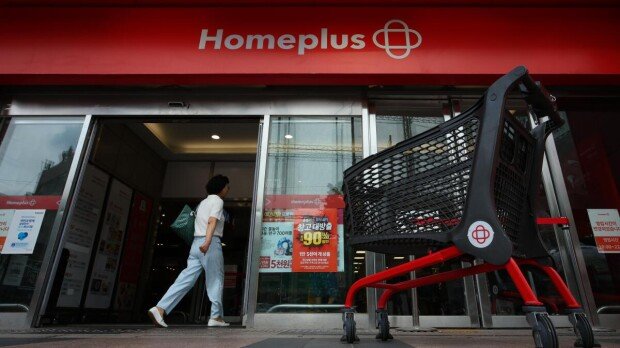
A South Korean court on Friday ended the corporate rehabilitation process for Homeplus, concluding that the retailer's turnaround plan was no longer workable. The former No. 2 hypermarket chain is now at risk of liquidation unless it can raise about 200 billion won in fresh funding within the next two weeks.
The Seoul Bankruptcy Court's Rehabilitation Division 4 ruled that Homeplus' revised rehabilitation plan, submitted June 30, was not financially viable. The court said the company needs at least 200 billion won in operating funds to carry out the plan while keeping its business running, but has yet to secure the money. With no realistic prospect of implementing the plan, the court ordered the rehabilitation proceedings terminated.
The court also pointed to the company's deteriorating financial position. While Homeplus completed the sale of its Homeplus Express supermarket business, it has yet to attract buyers for its remaining operations, which continue to operate. At the same time, revenue has declined as priority claims have risen sharply. The court said allowing the business to continue under those conditions would only add to debts that must be paid first, including supplier payments and employee wages.
The court could have extended the deadline for confirming a rehabilitation plan until September under South Korea's Debtor Rehabilitation and Bankruptcy Act. Instead, it brought the process to an immediate close, signaling its view that Homeplus was unlikely to secure the necessary financing even with more time. Samil PwC, the court-appointed rehabilitation examiner, estimated the company's going-concern value at 2.5058 trillion won, significantly below its liquidation value of 3.6816 trillion won, and concluded that outside funding would be essential for any viable restructuring.
The court said Homeplus has 14 days to appeal the ruling. It also said the rehabilitation process could be reopened if the company succeeds in raising the required 200 billion won. For now, however, those efforts remain stalled amid a dispute between Homeplus' controlling shareholder, MBK Partners, and its largest creditor, Meritz Financial Group.
Homeplus' financial troubles came into full view after its credit rating was downgraded in February last year. Since acquiring the retailer in 2015, MBK Partners, led by Chairman Kim Byung-joo, has relied in part on sale-and-leaseback transactions to reduce acquisition debt. The strategy eased borrowing pressures but left the company burdened with rising lease payments and interest costs, contributing to mounting operating losses. Homeplus sought court-led rehabilitation in March last year.
In a statement released Friday, Homeplus said Meritz Financial Group had declined to provide additional financing, arguing that a 100 billion won joint guarantee from MBK Partners and Chairman Kim Byung-joo was insufficient. The retailer appealed to Meritz to extend a 200 billion won working capital loan. Meritz rejected that claim, saying Kim had not personally guaranteed the group's earlier 100 billion won emergency operating loan.
여근호 yeoroot@donga.com



![[단독]韓정부, 하메네이 장례식 불참…“이란측에서 난색 표해”](https://dimg.donga.com/c/138/175/90/1/wps/NEWS/IMAGE/2026/07/05/134237981.1.jpg)




 About Dong-A Ilbo