

Election commission documents deepen credibility crisis
Election commission documents deepen credibility crisis
Posted July. 04, 2026 08:32,
Updated July. 04, 2026 08:32
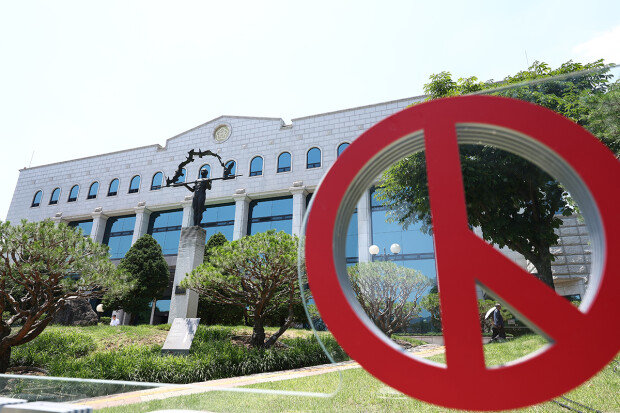
Internal documents suggest South Korea's National Election Commission looked for ways to avoid fully complying with a parliamentary investigation into the ballot shortage controversy. Although one document acknowledged there were no legal grounds to refuse lawmakers' request for meeting minutes, it proposed releasing the records only in stages, beginning with allowing lawmakers to inspect versions with commissioners' names removed rather than providing the minutes outright. Another document outlined arguments against demands that acting commission chair Wi Cheol-hwan resign, emphasizing the limited responsibility attached to an acting chair serving on a nonstanding basis.
The documents cast doubt on whether the commission fully grasps the seriousness of the controversy. In its internal review, the commission conceded that its usual reasons for withholding records, such as protecting personal information or preserving candid internal discussions, could not be applied to the parliamentary committee's request. Even so, it explored ways to avoid full disclosure, first by offering access only to anonymized minutes and later, if necessary, submitting the redacted version. The proposal reflects an organization preoccupied with minimizing institutional damage rather than uncovering the facts or pursuing meaningful reform.
The commission's handling of a series of controversies has steadily undermined public confidence. Its repeated missteps have also given fresh momentum to election fraud allegations that many had long dismissed as fringe conspiracy theories. According to the National Barometer Survey, released Thursday by four polling organizations, 42 percent of respondents said they believe fraud occurred in the June 3 local elections, including claims that vote counts were intentionally manipulated or the election was administered in a way that favored certain candidates. Without rebuilding public trust in the election watchdog, containing the spread of such allegations is likely to prove difficult.
The commission is now facing calls for a sweeping overhaul. Whenever controversies emerged, including the preferential hiring of senior officials' children and employees taking short-term leave during election periods, it resisted outside scrutiny by citing its constitutional independence. Shielded from meaningful oversight, the commission allowed incompetence, weak accountability and corruption to take root. It has now become the very institution accused of undermining confidence in elections and infringing on citizens' voting rights. Having squandered the public trust on which its legitimacy depends, the commission must now be held fully accountable.

![[단독]韓정부, 하메네이 장례식 불참…“이란측에서 난색 표해”](https://dimg.donga.com/c/138/175/90/1/wps/NEWS/IMAGE/2026/07/05/134237981.1.jpg)
![[단독]삼성전자, 사내 주거대출 ‘국평 85㎡’ 이하로 제한한다](https://dimg.donga.com/c/138/175/90/1/wps/NEWS/IMAGE/2026/07/05/134239674.1.jpg)



 About Dong-A Ilbo