

Trump's Iran deal draws conservative backlash
Trump's Iran deal draws conservative backlash
Posted June. 17, 2026 08:24,
Updated June. 17, 2026 08:24
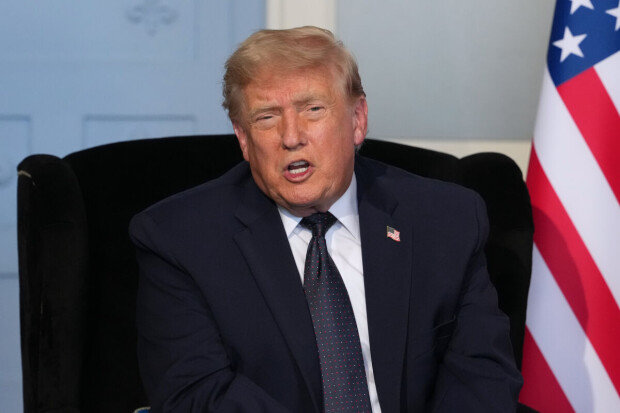
As U.S. Vice President J.D. Vance and Iranian Parliament Speaker Mohammad Bagher Ghalibaf prepare to sign a memorandum of understanding in Geneva on June 19 aimed at ending the war, resistance to the agreement is growing among American conservatives. Critics contend that the deal grants significant concessions to Tehran without securing a clear commitment to dismantle its nuclear program. Amid mounting calls for transparency, U.S. President Donald Trump said the document would be released after the signing ceremony. Vance also said the agreement would be made public this week, describing it as a "very rough" document of roughly a page and a half.
Trump said he completed an electronic signing of the agreement with Iran on June 14 during a meeting with French President Emmanuel Macron on the sidelines of the Group of Seven summit in Evian, France. He added that the Strait of Hormuz had already been partially reopened and would be fully reopened by June 19, when the formal signing ceremony takes place. U.S. political news outlet Axios reported that the 60-day ceasefire extension took effect immediately after the electronic signing.
The agreement has become a flashpoint among Trump's conservative supporters. Conservative commentator Erick Erickson wrote on X on June 15 that "Trump surrendered to Iran," voicing strong dissatisfaction with the accord. Fox News host Mark Levin also questioned the administration's reluctance to release the text, asking, "Why can't we see the damn MOU?" Axios reported that hard-liners in both the United States and Israel are demanding greater clarity from the White House on what Iran stands to gain under the agreement and what would happen if nuclear negotiations ultimately break down.
Meanwhile, Axios reported that during a meeting held before the June 14 announcement, CIA Director John Ratcliffe, U.S. Secretary of State Marco Rubio and U.S. Defense Secretary Pete Hegseth expressed concerns about Iran's commitment to carrying out any nuclear agreement. Ratcliffe and other officials reportedly pointed to intelligence assessments suggesting uncertainty over whether Tehran would accept the nuclear measures sought by Washington.
Jin-Woo Shin niceshin@donga.com

![“매일 걷는데도 건강검진 빨간불?”…310만명 분석해 보니 [바디플랜]](https://dimg.donga.com/c/138/175/90/1/wps/NEWS/IMAGE/2026/06/16/134118691.3.jpg)





 About Dong-A Ilbo