

Zombie companies drag down healthy businesses
Zombie companies drag down healthy businesses
Posted June. 17, 2026 08:25,
Updated June. 17, 2026 08:25
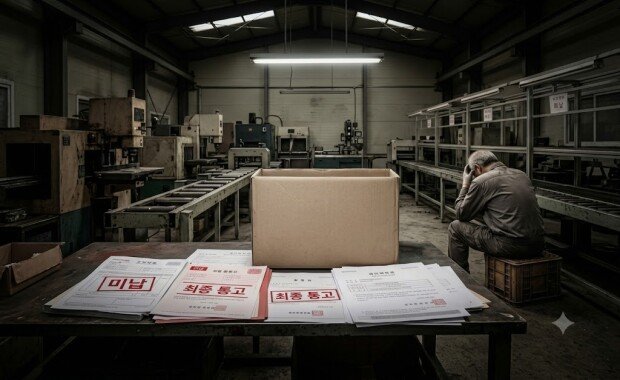
The Bank of Korea has delivered a clear warning: struggling "zombie companies" are not only jeopardizing their own future but also holding back healthy businesses. Allowing these financially distressed firms to linger can spread weakness throughout the corporate sector, turning viable companies into zombies as well. The findings reinforce the need to move more decisively in identifying and restructuring unproductive firms that drag on economic growth.
A marginal company is defined as a business whose operating profit has failed to cover interest expenses for three consecutive years. Such firms are often unable to sustain themselves without external support. Yet many continue operating through borrowed funds, absorbing capital and labor while squeezing healthier competitors in the marketplace. According to the Bank of Korea, a 1 percentage point increase in the share of marginal firms within an industry lowers investment and employment growth among healthy companies by roughly 0.14 to 0.18 percentage points.
The problem runs deeper than a one-time drag on performance. The central bank found that the adverse effects of marginal firms can persist for two to three years, with smaller companies and nonmanufacturing businesses suffering the greatest damage. A larger concentration of zombie firms also raises risks for suppliers, customers and other business partners. In times of economic stress, those risks can spread to financial institutions, potentially turning corporate weakness into a broader financial threat.
If South Korea hopes to redirect capital away from speculative real estate and toward high-value industries such as artificial intelligence, semiconductors and biotechnology, it must first clear away obstacles that distort the allocation of resources. The Bank of Korea estimates that removing one-quarter of marginal firms would raise economy-wide total factor productivity by 0.2 percent and increase value added by 0.35 percent.
During economic downturns, policymakers and creditors have often extended loan maturities and granted repayment relief to troubled firms out of concern for local economies and jobs. When conditions improve, many of those companies simply continue operating without restoring their competitiveness. Banks, meanwhile, frequently prefer extending support to forcing restructuring because recognizing losses requires substantial loan-loss provisions. As a result, the share of marginal firms rose to 17.1 percent at the end of 2024, the highest level in 14 years.
Delaying restructuring only increases the eventual cost. Once a crisis unfolds, financial distress can quickly ripple through suppliers, lenders and even healthy firms. South Korea can no longer afford to postpone efforts to detect warning signs early, separate recoverable companies from those with little prospect of survival and carry out timely restructuring. To ease the transition and maintain momentum, restructuring should be accompanied by policies that foster emerging industries and support worker retraining and job mobility. The fate of marginal firms should be determined by economic fundamentals, not political considerations.








 About Dong-A Ilbo