

Korea’s shipping risks persist despite Hormuz passage
Korea’s shipping risks persist despite Hormuz passage
Posted May. 21, 2026 08:24,
Updated May. 21, 2026 08:24
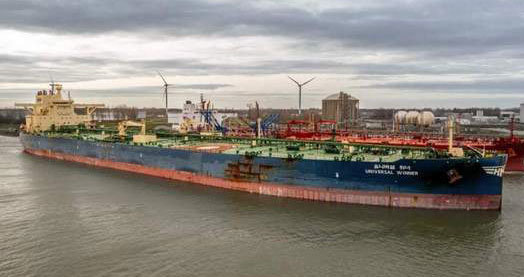
A South Korean-flagged oil tanker has safely passed through the Strait of Hormuz for the first time in 81 days since the outbreak of armed conflict between the United States and Iran, marking a rare safe transit through one of the world’s most volatile maritime chokepoints.
The HMM-operated Universal Winner, carrying about 2 million barrels of crude oil, departed waters near Qatar in the early hours of the 19th and transited the Strait of Hormuz on May 20. The vessel has 21 people on board, including nine South Korean nationals, and is expected to arrive in Ulsan around June 10 after sailing through the Gulf of Oman.
South Korean officials described the passage as a significant relief in a region where shipping routes have faced heightened security risks since the outbreak of hostilities. They said the transit was secured through sustained emergency diplomacy with Iran, including repeated high-level calls between foreign ministers and the dispatch of a special envoy to Tehran to press for safe passage of South Korean vessels.
Officials also said no additional fees or concessions were provided to Iran, and that the transit was coordinated in advance with the United States, South Korea’s key ally.
Despite the successful passage, Seoul stressed that risks remain. Twenty-five South Korean vessels and more than 110 South Korean crew members, including those aboard the damaged Namu tanker, are still operating in or near the Strait of Hormuz.
The government said it is mobilizing all diplomatic resources to ensure the safe return of all ships and personnel without further loss or injury.
At the same time, South Korea is working to clarify the circumstances surrounding the May 4 attack on the Namu. Foreign Minister Cho Hyun told lawmakers on May 20 that the investigation is nearing completion, but authorities have not yet definitively identified the perpetrator.
Once responsibility is established, Seoul said it will respond in a principle-based and proportionate manner, while prioritizing the safety of vessels and crews.
Tensions in the Middle East remain high. Although a reported U.S. strike on Iran was recently put on hold, concerns persist that fighting could resume depending on decisions by U.S. President Donald Trump.
Officials warn that any renewed escalation could expose South Korean shipping to greater risk, underscoring the need for a carefully calibrated diplomatic strategy to avoid being drawn into a broader conflict.








 About Dong-A Ilbo