

Ghost tourism boom raises concerns at massacre sites
Ghost tourism boom raises concerns at massacre sites
Posted May. 21, 2026 08:24,
Updated May. 21, 2026 08:24
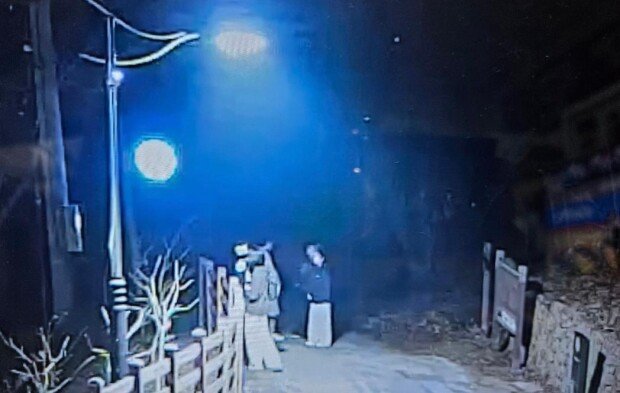
In the early hours of May 14, Na Jeong-tae, 80, sat alone in a dark apartment in Daegu’s Dalseo District, eyes fixed on a tablet streaming live CCTV footage from a remote site about 20 kilometers away.
The cameras monitored the entrance road and the abandoned Gyeongsan Cobalt Mine, a place tied to one of the country’s darkest wartime massacres. Even in the quiet of night, Na kept zooming in, scanning for movement.
“This is when I’m most tense,” he said. “You never know when people coming for so-called ghost experiences might show up. It breaks the hearts of families”
At one point, headlights cut through the darkness on the road leading to the site. A car pulled up, and four men in their 20s and 30s stepped out, sweeping the area with flashlights as they wandered through the abandoned grounds with an air of excitement.
When Na activated a loudspeaker installed at the entrance and ordered them to leave the memorial area, they appeared startled and quickly left. Hours later, by around 1 p.m., Na was still on site, exhaustion visible on his face. He has been spending nights monitoring the area since April last year.
“Residents kept telling us strangers were coming through at dawn,” he said. “We started finding cigarette butts and signs of damage at the memorial, so we installed surveillance equipment.”
The mine opened in 1937 under Japanese colonial rule to extract cobalt, gold and silver. After liberation, it was closed, but during the Korean War it became the site of a mass killing in which about 3,500 civilians accused of leftist sympathies were executed by military and police forces. Victims were reportedly shot near the entrance, with bodies dropped into a vertical shaft. Na’s father was among those killed.
In recent years, the site has taken on a new and troubling identity online as a “ghost sighting” destination. The trend began about a decade ago after a television program described it as a place where spirits might appear, and has since spread widely through YouTube and other platforms featuring horror “experience” content.
Lee Chang-hee, 76, an official with the victims’ association, said visitors now range from teenagers to content creators carrying professional equipment in search of viral views. “Summer is especially bad. The number of visitors spikes, and we’re already worried,” he said.
Na said more than 300 family members involved in managing the site still live with unresolved grief, noting that many victims’ remains have never been recovered. “These are people who lost their families unjustly, and we still haven’t found their remains,” he said. “It is painful that a place of such suffering is treated as entertainment.”
The problem is not limited to the Gyeongsan Cobalt Mine. Other sites linked to accidents and disasters, including Salmokji in Yesan, South Chungcheong Province, and the abandoned Gonjiam psychiatric hospital in Gwangju, Gyeonggi Province, have also seen rising numbers of so-called horror tourists, prompting complaints from residents.
In 2023, the city of Wonju in Gangwon Province, home to Chiaksan National Park, sought an injunction against the horror film “The 12th Suspect,” arguing that its depiction of brutal killings in the area could damage the region’s image and encourage disruptive visits.
Experts say stronger oversight is needed for online content that spreads false rumors or encourages trespassing.
Hyeon Taek-su, head of the Korea Social Issues Research Institute, said authorities should more actively monitor posts that reveal exact locations or encourage visits. He also called for tougher penalties, including monetization restrictions or account suspensions, for repeat offenders among content creators.
경산=명민준 기자 mmj86@donga.com








 About Dong-A Ilbo