

Education grant windfall demands reform
Education grant windfall demands reform
Posted May. 23, 2026 08:18,
Updated May. 23, 2026 08:18
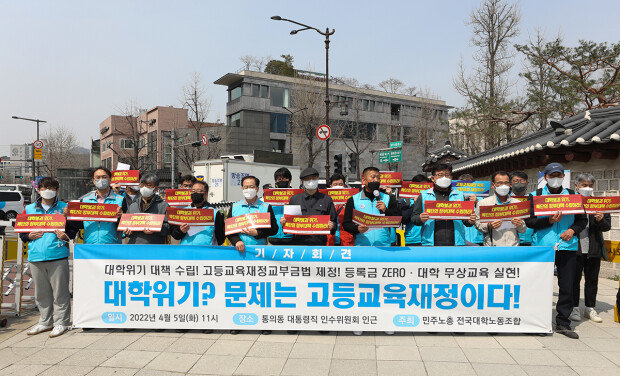
As a semiconductor boom swells tax revenues and sends education grants soaring, Education Minister Choi Kyo-jin has opened the door to a long-overdue debate over how those funds should be used.
Choi said the government could explore “reasonable ways” to utilize the additional revenue. While rejecting the notion that education budgets should automatically shrink alongside falling student enrollment, he also acknowledged that South Korea’s spending on higher education remains below the OECD average and deserves greater attention.
That matters because the current system walls off education grants for kindergartens and primary and secondary schools, even as universities face growing financial pressure. Choi’s remarks suggest those barriers may finally be up for discussion.
The semiconductor boom has handed an enormous windfall to the nation’s 16 provincial and metropolitan education offices. Under the existing formula, 20.79% of domestic tax revenue is automatically transferred to education grants regardless of demographic realities. Annual allocations, once in the 70 trillion won range, are expected to exceed 80 trillion won this year.
The problem is not a shortage of money. Education offices have already accumulated roughly 20 trillion won in unused reserves because they have struggled to spend what they receive. Now even more funding is on the way.
That reality is reflected in the promises being made by candidates in superintendent elections held alongside the June 3 local elections. Proposals such as fully subsidized student transportation and monthly education allowances are proliferating because many candidates assume the money will be there.
Criticism of the grant system predates the latest semiconductor-driven revenue surge. Because funding rises automatically whenever tax receipts increase, spending has continued to expand even as the number of students has fallen sharply.
Per-student education funding climbed from 6.23 million won in 2015 to 13.71 million won last year, more than doubling in a decade. Critics point to unnecessary rebuilding projects at perfectly serviceable schools and the distribution of free laptops and cash payments as examples of spending that has grown increasingly difficult to justify.
The imbalance across the education system is even more troubling. Public spending per student in elementary, middle and high schools stands at 155% to 179% of the OECD average. For university students, the figure is only 68%.
Among the OECD’s 38 members, South Korea and Greece are the only countries where public spending per university student is lower than spending per primary and secondary school students.
The grant system was created in 1972, when surging enrollment made stable funding for primary and secondary education an urgent national priority. That era has passed.
Today, low birth rates and rapid population aging are driving demand for vocational training, reskilling and lifelong education. The rise of artificial intelligence is also increasing the need for investment in university research and advanced talent development.
An education finance system designed for the demographic realities of the 1970s cannot adequately serve the needs of the 2020s. If policymakers want public spending to reflect today’s educational priorities rather than yesterday’s assumptions, reforming the education grant system should be the place to start.


![“아버지 이미 사망했는데”…손주에게 이어진 조부모 빚 [상속리포트]](https://dimg.donga.com/c/138/175/90/1/wps/NEWS/IMAGE/2026/05/22/133975868.3.jpg)




 About Dong-A Ilbo