

Trump, Xi end China visit without breakthrough
Trump, Xi end China visit without breakthrough
Posted May. 16, 2026 08:21,
Updated May. 16, 2026 08:21
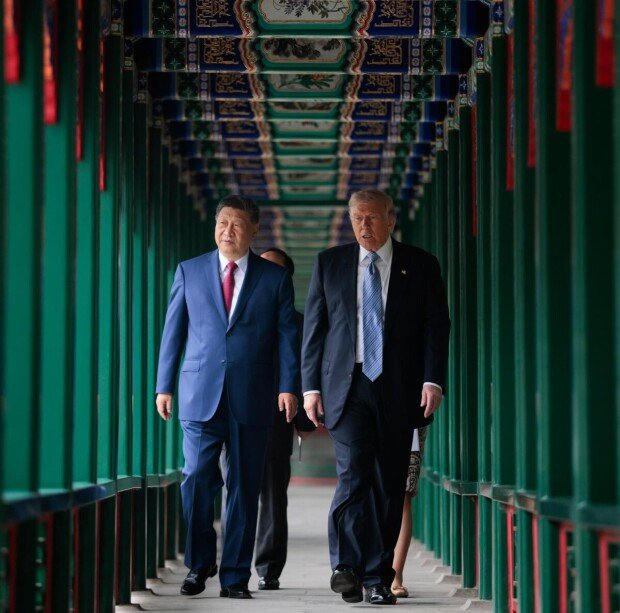
U.S. President Donald Trump concluded his three-day state visit to China on Friday after six rounds of talks with Chinese President Xi Jinping covering Taiwan, the Iran conflict and trade tensions between the world’s two largest economies.
The trip, Trump’s first to China in eight and a half years since November 2017, appeared to yield a broad understanding aimed at preventing ties from sliding back into open confrontation following tariff disputes and other frictions that emerged after the start of his second administration. But the meetings produced no concrete breakthroughs on core issues, instead underscoring lingering differences between Washington and Beijing. No joint statement was issued.
In the latest round of discussions, Trump emphasized economic gains, pointing to expanded exports of U.S. aircraft, agricultural products and crude oil. Xi, meanwhile, drew firm lines on Taiwan and promoted what Chinese officials describe as a “constructive strategic stable relationship,” framing bilateral ties in longer-term geopolitical terms that contrasted with Trump’s focus on immediate trade outcomes.
The two leaders met twice on Friday at Zhongnanhai in Beijing, first over tea and later for a working lunch. The compound, which houses China’s top leadership and is often described as the country’s political nerve center, has rarely hosted sitting U.S. presidents. Trump’s visit was the first since Barack Obama in 2014.
The meetings came after a packed schedule that included a formal welcome ceremony, summit talks, a visit to Tiantan Park and a state banquet, highlighting an unusually intensive round of diplomacy.
Trump called the outcome a “fantastic trade deal,” saying in remarks after the summit that China had agreed to purchase 200 Boeing aircraft and increase soybean imports to support American farmers. In a Fox News interview recorded after Thursday’s talks and aired Friday, he repeated those claims, framing them as tangible wins ahead of the November midterm elections.
On the Chinese side, the Foreign Ministry said the two leaders agreed to elevate what it called a “constructive strategic stable relationship” to a new status in bilateral ties, which Beijing said would guide long-term engagement going forward.
Analysts say the framing reflects Beijing’s effort to shift U.S.-China relations away from transactional negotiations toward a broader strategic balance-of-power framework, signaling a push to engage Washington on more equal footing.
“It signals, ‘we are your equal, and you are no longer the sole superpower,’” said Lina Tobin, a China expert who served on the White House National Security Council during Trump’s first term, in an interview with PBS.
China’s state-run Xinhua News Agency also emphasized the strategic tone of the talks, saying the two leaders agreed to “reset” ties and would jointly “steer the giant ship of China-U.S. relations,” aiming to bring greater stability to a world marked by volatility and rapid change.
Jin-Woo Shin niceshin@donga.com



![“늙은 혈액 줄기세포 젊어졌다”…역노화 단서 발견 [노화설계]](https://dimg.donga.com/c/138/175/90/1/wps/NEWS/IMAGE/2026/05/15/133931603.3.jpg)


 About Dong-A Ilbo