

Lawmaking stalls amid political gridlock in Seoul
Lawmaking stalls amid political gridlock in Seoul
Posted May. 16, 2026 08:20,
Updated May. 16, 2026 08:20
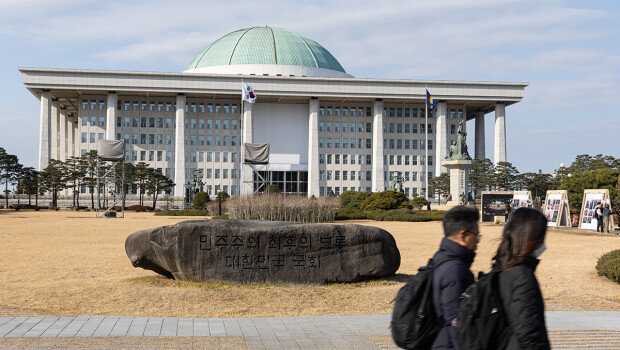
The approval rate for bills in the first half of South Korea’s 22nd National Assembly has fallen to 7.5 percent, a steep drop from previous legislatures as intensifying political confrontation slows even measures tied to everyday livelihoods.
According to the National Assembly’s legislative information system on Friday, 1,397 of the 18,473 bills introduced between May 30, 2024, when the 22nd National Assembly convened, and May 14 this year were passed in plenary sessions. That works out to an approval rate of just 7.5 percent, meaning fewer than eight in every 100 bills introduced cleared the floor. The figure marks the lowest level among recent assemblies.
By comparison, first-half passage rates stood at 15.4 percent in the 19th National Assembly, 13.25 percent in the 20th, and 11.5 percent in the 21st.
The decline is attributed to a steady increase in the volume of bills being introduced, coupled with growing delays in committee review and floor votes amid entrenched partisan conflict.
Since the start of the 22nd National Assembly, lawmakers have been locked in sharp disputes over budget cuts and impeachment motions targeting cabinet ministers. Tensions have persisted even after the launch of the Lee Jae-myung administration, with continued clashes over major legislative agendas, including three special counsel investigations into alleged insurrection, allegations involving former First Lady Kim Keon Hee, and the death of a Marine in service, as well as prosecutorial reform bills.
The standoffs have fueled frequent filibusters and committee boycotts, further clogging the legislative process. As a result, bills related to housing supply and other livelihood issues remain stuck in committee or awaiting floor action.
“Legislative consensus, where bills affecting people’s livelihoods are prioritized over political disputes, has effectively disappeared,” said Lee Jae-mook, a professor of political science and diplomacy at Hankuk University of Foreign Studies.
구민기 koo@donga.com

![[단독]삼성 파업 위기… 정부 ‘긴급조정권 발동’ 물밑작업 속도](https://dimg.donga.com/c/138/175/90/1/wps/NEWS/IMAGE/2026/05/16/133934209.1.jpg)

![“직접 산다더니 다시 세 놨다”…손해배상 가능할까 [집과법]](https://dimg.donga.com/c/138/175/90/1/wps/NEWS/IMAGE/2026/05/15/133930864.3.jpg)


 About Dong-A Ilbo