

WEFLO: Securing Global Mobility Safety with AI-Driven Contactless Inspection Technology
WEFLO: Securing Global Mobility Safety with AI-Driven Contactless Inspection Technology
Posted April. 17, 2026 09:26,
- WEFLO is a South Korean startup that has developed and commercialized "AI contactless mobility inspection technology," capable of diagnosing 16 different items in under a minute without physical contact.
- By utilizing AI to analyze sensor data, the platform provides predictive maintenance reports that include safety scores, remaining part lifespans, and operational fitness to prevent fatal accidents.
- The company is rapidly expanding its "Physical AI" solutions globally through partnerships with organizations like NASA and Augusta Regional Airport, while securing a strong foothold in the Korean defense and public sectors.
From drones performing various roles such as delivery and surveillance to autonomous vehicles, robots, and next-generation unmanned aircraft including air taxis—today’s dazzlingly advanced mobility industry has brought scenes once confined to human imagination into reality. As information and communication technology has progressed, the types of mobility devices and their spheres of activity have become increasingly diverse.
Along with the evolution of mobility devices, related technologies such as charging stations and autonomous inspection and operation stations serving as bases are also becoming more sophisticated. Among these, inspection and maintenance are one of the technologies the mobility industry is watching most closely. This is because failure to perform perfect inspection, maintenance, and response can lead to fatal accidents such as the crashing or explosion of mobility devices.
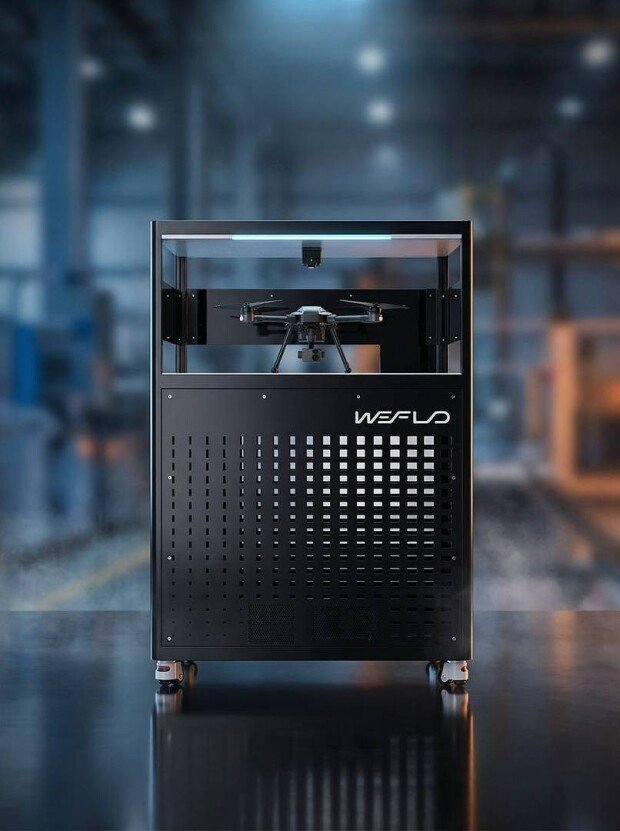
Naturally, companies reseaching and developing mobility inspection and maintenance technology are drawing attention. Among them, the technology presented by the Korean startup WEFLO stands out. This is thanks to their introduction and commercialization of "AI contactless mobility inspection technology," which is distinctly different from visual inspections performed manually with various devices or contact inspections using information cables and inspection equipment.
WEFLO’s AI contactless mobility inspection technology automates the entire process. First, the mobility device to be inspected is fixed onto the diagnostic equipment, and various data, such as the energy level of the drive unit and vibration frequency, are collected via contactless sensors. The contactless sensors inspect 16 different items, including: ▲drive unit RPM ▲motor disconnection/short circuit ▲blade (propeller) installation direction ▲blade balance and grip ▲arm (blade support) structural fatigue ▲ESC operating frequency ▲drive unit response time ▲drive unit balancing ▲vibration frequency of the airframe ▲appearance (cracks, scratches, structural changes) ▲thermal abnormalities ▲battery charge/discharge status ▲automatic geomagnetic calibration ▲FCC electronic component status ▲and the status of sensors mounted on the aircraft. Despite the extensive list of inspection items, the process is completed in less than one minute.
Once data collection is complete, artificial intelligence analyzes it to determine abnormalities and generates a report. This report contains information that assists in decision-making, such as the degree of mobility aging, health scores for each part, average lifespan and part replacement timing, whether the device is currently operable, and when and which parts should be replaced.
WEFLO’s AI contactless mobility inspection technology offers various utilities. Mobility devices, especially those using electricity, utilize high voltage, posing a risk of accidents during contact inspections. Furthermore, contact inspection technology can only identify energy levels. Depending on the volume or type of the mobility device, contact inspection can be extremely difficult or even impossible.
In contrast, contactless inspection eliminates the risk of accidents. It also provides richer data, including physical quantities as well as energy levels. It can accommodate almost all types of mobility, from small drones to medium-sized autonomous vehicles and large aircraft.
When AI technology is added, the utility becomes even greater. By gathering contactless inspection data, it is possible to detect and respond to abnormal signals of mobility failure in advance. WEFLO has already developed technologies to score the status of mobility parts using AI and predictive maintenance technology to predict average lifespan and replacement timing. Naturally, these technologies are expected to evolve into autonomous AI models that learn and respond on their own, and "Physical AI" that increases utility by fusing hardware and software.

WEFLO has achieved several milestones by applying this technology to the public and defense sectors in Korea. They have established 151 delivery points at 38 drone delivery hubs created by the Ministry of Land, Infrastructure and Transport, operating 34 automatic device inspection pads. They also participated in the combat experiments and suitability determinations of the Drone Bot Battle Group of the Ground Operations Command of the Republic of Korea Army, demonstrating automatic pre- and post-takeoff inspection scenarios for two types of drones: multicopters and fixed-wing. As a result, the technology was judged useful in combat experiments conducted with the military. They also participated in automating quality inspection processes for Korean drone manufacturers, joint development of inspection platforms with major defense companies, and the establishment of drive unit inspection systems for manufacturing lines.
Subsequently, WEFLO established a cooperation system with overseas defense companies. They formed an AAM Working Group Partnership with NASA and the Georgia Department of Transportation (GDOT). In February 2026, they met with defense companies from Israel, Singapore, and the United States to discuss technical cooperation for demonstrating inspection systems for various drones. They also signed a memorandum of understanding (MOU) for the maintenance of military drone systems with a Polish defense company. The potential for growth in the Physical AI sector was also proven. By signing an MOU with Augusta Regional Airport (AGS) in the U.S., they plan to create a dedicated demonstration space for aircraft inspection and verify the effectiveness of Physical AI solutions that align with global aviation safety guidelines.

Based on its global performance, WEFLO has completed its Series A investment round. The funds will be used to advance its AI predictive maintenance and data platform for mobility. By combining inspection sensor hardware with AI software, it will evolve into a full-cycle diagnostic platform, covering everything from production quality inspection to operational status diagnosis. Based on the inspection data obtained from this platform and the Verti-Pit series, they have also planned an expansion into a big data platform that integrates, analyzes, and manages data from various types of mobility.
Leveraging achievements such as the Ministry of Land, Infrastructure and Transport's drone delivery demonstration project, the ROK Army Warfighting experiment participation certificate, and being designated as a Defense Innovation Company by the Defense Acquisition Program Administration (DAPA), WEFLO will strengthen cooperation with global public and defense enterprises. In this process, they will also solidify their position in Physical AI and mobility-specific Vertical AI.

Yee-Jung Kim, CEO of WEFLO, stated: “The most important aspect of mobility inspection and maintenance is judging and deciding whether the device is fit for operation and when and which parts need repair. WEFLO provides these decisions clearly by utilizing data and AI. Starting with drones and extending to air taxis and autonomous vehicles, we will establish ourselves as a company that guarantees the safety of all mobility through data and AI.”
By Joo-kyung Cha (racingcar@itdonga.com)
- By utilizing AI to analyze sensor data, the platform provides predictive maintenance reports that include safety scores, remaining part lifespans, and operational fitness to prevent fatal accidents.
- The company is rapidly expanding its "Physical AI" solutions globally through partnerships with organizations like NASA and Augusta Regional Airport, while securing a strong foothold in the Korean defense and public sectors.
From drones performing various roles such as delivery and surveillance to autonomous vehicles, robots, and next-generation unmanned aircraft including air taxis—today’s dazzlingly advanced mobility industry has brought scenes once confined to human imagination into reality. As information and communication technology has progressed, the types of mobility devices and their spheres of activity have become increasingly diverse.
Along with the evolution of mobility devices, related technologies such as charging stations and autonomous inspection and operation stations serving as bases are also becoming more sophisticated. Among these, inspection and maintenance are one of the technologies the mobility industry is watching most closely. This is because failure to perform perfect inspection, maintenance, and response can lead to fatal accidents such as the crashing or explosion of mobility devices.
WEFLO’s AI-based contactless mobility inspection device, Verti-Pit QC/ source=WEFLO
Naturally, companies reseaching and developing mobility inspection and maintenance technology are drawing attention. Among them, the technology presented by the Korean startup WEFLO stands out. This is thanks to their introduction and commercialization of "AI contactless mobility inspection technology," which is distinctly different from visual inspections performed manually with various devices or contact inspections using information cables and inspection equipment.
WEFLO’s AI contactless mobility inspection technology automates the entire process. First, the mobility device to be inspected is fixed onto the diagnostic equipment, and various data, such as the energy level of the drive unit and vibration frequency, are collected via contactless sensors. The contactless sensors inspect 16 different items, including: ▲drive unit RPM ▲motor disconnection/short circuit ▲blade (propeller) installation direction ▲blade balance and grip ▲arm (blade support) structural fatigue ▲ESC operating frequency ▲drive unit response time ▲drive unit balancing ▲vibration frequency of the airframe ▲appearance (cracks, scratches, structural changes) ▲thermal abnormalities ▲battery charge/discharge status ▲automatic geomagnetic calibration ▲FCC electronic component status ▲and the status of sensors mounted on the aircraft. Despite the extensive list of inspection items, the process is completed in less than one minute.
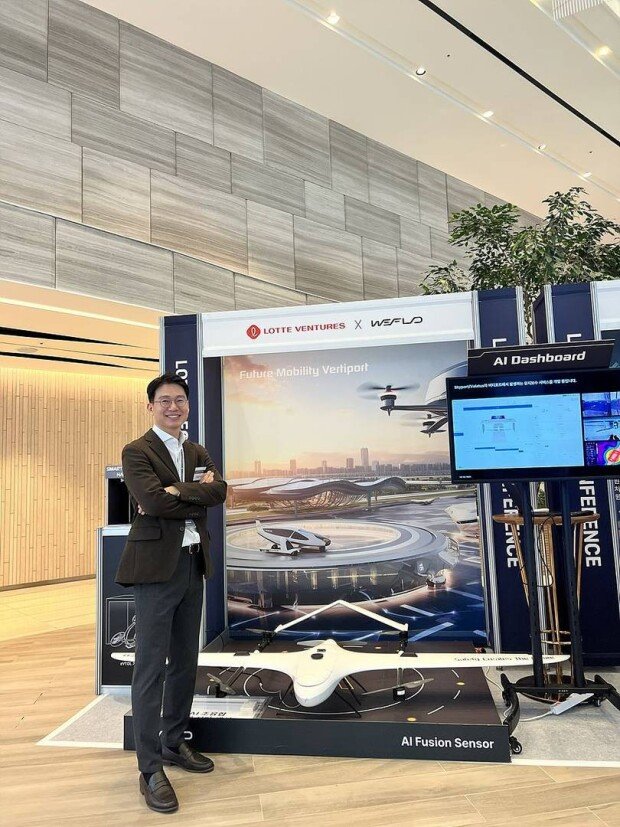
WEFLO introducing its technology at the LOTTE AI Conference/ source=WEFLO
Once data collection is complete, artificial intelligence analyzes it to determine abnormalities and generates a report. This report contains information that assists in decision-making, such as the degree of mobility aging, health scores for each part, average lifespan and part replacement timing, whether the device is currently operable, and when and which parts should be replaced.
WEFLO’s AI contactless mobility inspection technology offers various utilities. Mobility devices, especially those using electricity, utilize high voltage, posing a risk of accidents during contact inspections. Furthermore, contact inspection technology can only identify energy levels. Depending on the volume or type of the mobility device, contact inspection can be extremely difficult or even impossible.
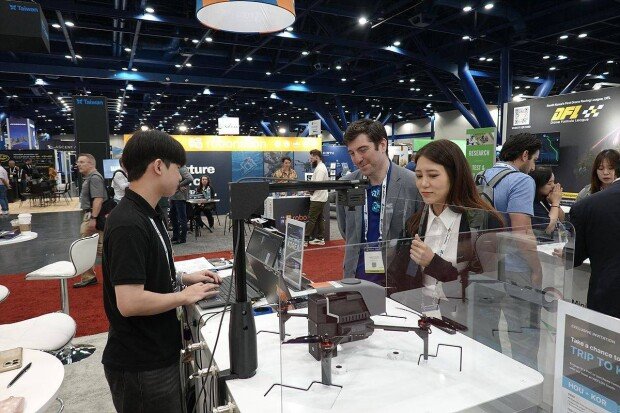
WEFLO introducing its technology to international industry officials / source=WEFLO
In contrast, contactless inspection eliminates the risk of accidents. It also provides richer data, including physical quantities as well as energy levels. It can accommodate almost all types of mobility, from small drones to medium-sized autonomous vehicles and large aircraft.
When AI technology is added, the utility becomes even greater. By gathering contactless inspection data, it is possible to detect and respond to abnormal signals of mobility failure in advance. WEFLO has already developed technologies to score the status of mobility parts using AI and predictive maintenance technology to predict average lifespan and replacement timing. Naturally, these technologies are expected to evolve into autonomous AI models that learn and respond on their own, and "Physical AI" that increases utility by fusing hardware and software.
WEFLO introducing its technology to international industry officials / source=WEFLO
WEFLO has achieved several milestones by applying this technology to the public and defense sectors in Korea. They have established 151 delivery points at 38 drone delivery hubs created by the Ministry of Land, Infrastructure and Transport, operating 34 automatic device inspection pads. They also participated in the combat experiments and suitability determinations of the Drone Bot Battle Group of the Ground Operations Command of the Republic of Korea Army, demonstrating automatic pre- and post-takeoff inspection scenarios for two types of drones: multicopters and fixed-wing. As a result, the technology was judged useful in combat experiments conducted with the military. They also participated in automating quality inspection processes for Korean drone manufacturers, joint development of inspection platforms with major defense companies, and the establishment of drive unit inspection systems for manufacturing lines.
Subsequently, WEFLO established a cooperation system with overseas defense companies. They formed an AAM Working Group Partnership with NASA and the Georgia Department of Transportation (GDOT). In February 2026, they met with defense companies from Israel, Singapore, and the United States to discuss technical cooperation for demonstrating inspection systems for various drones. They also signed a memorandum of understanding (MOU) for the maintenance of military drone systems with a Polish defense company. The potential for growth in the Physical AI sector was also proven. By signing an MOU with Augusta Regional Airport (AGS) in the U.S., they plan to create a dedicated demonstration space for aircraft inspection and verify the effectiveness of Physical AI solutions that align with global aviation safety guidelines.
WEFLO booth at an overseas exhibition / source=WEFLO
Based on its global performance, WEFLO has completed its Series A investment round. The funds will be used to advance its AI predictive maintenance and data platform for mobility. By combining inspection sensor hardware with AI software, it will evolve into a full-cycle diagnostic platform, covering everything from production quality inspection to operational status diagnosis. Based on the inspection data obtained from this platform and the Verti-Pit series, they have also planned an expansion into a big data platform that integrates, analyzes, and manages data from various types of mobility.
Leveraging achievements such as the Ministry of Land, Infrastructure and Transport's drone delivery demonstration project, the ROK Army Warfighting experiment participation certificate, and being designated as a Defense Innovation Company by the Defense Acquisition Program Administration (DAPA), WEFLO will strengthen cooperation with global public and defense enterprises. In this process, they will also solidify their position in Physical AI and mobility-specific Vertical AI.
Yee-Jung Kim, CEO of WEFLO(Speaker), presenting at the founding general meeting of the Drone Industry Alliance/ source=WEFLO
Yee-Jung Kim, CEO of WEFLO, stated: “The most important aspect of mobility inspection and maintenance is judging and deciding whether the device is fit for operation and when and which parts need repair. WEFLO provides these decisions clearly by utilizing data and AI. Starting with drones and extending to air taxis and autonomous vehicles, we will establish ourselves as a company that guarantees the safety of all mobility through data and AI.”
By Joo-kyung Cha (racingcar@itdonga.com)








 About Dong-A Ilbo