

Samsung surge signals new chip era
Samsung surge signals new chip era
Posted April. 08, 2026 08:50,
Updated April. 08, 2026 08:58
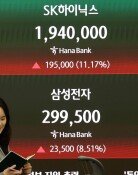
Samsung Electronics set a new benchmark in the first quarter, reporting record revenue and operating profit that mark an unprecedented milestone for the company.
In a regulatory filing Monday, Samsung Electronics said consolidated revenue for the January to March period reached 133 trillion won, while operating profit was estimated at 57.2 trillion won. Quarterly revenue surpassed 100 trillion won for the first time, and operating profit soared well past the previous record of 20 trillion won set in the fourth quarter of last year.
In just three months, the company generated more than 13 trillion won in additional operating profit compared with its full-year total of 43.6 trillion won last year, highlighting the scale of the surge.
Semiconductors were the clear engine of growth. Brokerages estimate that operating profit from the Device Solutions division alone exceeded 50 trillion won. Surging global demand for artificial intelligence lifted the entire memory chip sector, including high bandwidth memory, conventional DRAM and NAND flash. The chip design and foundry businesses also rebounded, adding further support.
The results underscore Samsung’s position as a central player in the global race for AI semiconductor leadership, placing it alongside major technology firms. Based on the latest available figures, its operating profit ranks behind Apple, Nvidia and Microsoft.
The outlook remains favorable. Continued investment in data centers is expected to sustain demand for AI chips. Samsung has also begun mass production of sixth-generation HBM4, strengthening its position in next-generation memory. Some analysts project operating profit could reach 300 trillion won this year and 400 trillion won next year.
Beyond the headline figures, the results carry broader economic weight. Samsung’s projected annual operating profit exceeds 40 percent of the government’s annual budget and approaches 13 percent of South Korea’s real gross domestic product last year. Strong earnings are expected to support corporate tax revenue, job creation and income growth, while also boosting investor assets.
Challenges remain. Global uncertainty tied to the conflict in the Middle East and U.S. tariffs persists, and the semiconductor supercycle may not last indefinitely. Competitive pressure from the United States and China is also intensifying. Rather than becoming complacent, the company will need to reinforce its core competitiveness and prepare for the next phase.
The latest results may mark the starting point of a new chapter in Samsung’s semiconductor growth story.


![‘리듬체조 요정’ 신수지 “일루전 시구 후 스포테이너 됐죠”[이헌재의 인생홈런]](https://dimg.donga.com/c/138/175/90/1/wps/NEWS/IMAGE/2026/05/25/133986725.1.png)



 About Dong-A Ilbo