

Researchers address durability of next-generation solar cells
Researchers address durability of next-generation solar cells
Posted March. 25, 2026 09:08,
Updated March. 25, 2026 09:08
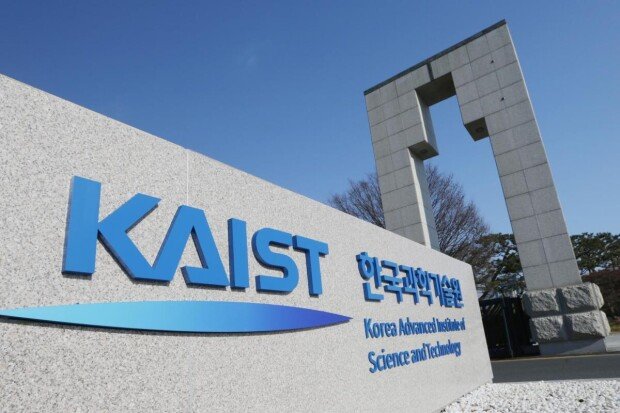
A South Korean research team has reported a breakthrough that enhances both the efficiency and lifespan of solar cells, overcoming the long-standing trade-off between the two.
The Korea Advanced Institute of Science and Technology said on March 24 that a team led by Seo Jang-won, a distinguished professor of chemical and biomolecular engineering, in collaboration with the Korea Research Institute of Chemical Technology, has developed a two-dimensional protective layer design that improves both efficiency and long-term stability in perovskite solar cells.
Interest in perovskite materials has risen as space-based solar power emerges as a next-generation energy technology. Perovskite solar cells, which use semiconductor materials with a perovskite structure as the light-absorbing layer, are regarded as a promising alternative to conventional silicon-based cells due to their lower production costs and higher efficiency. However, their tendency to degrade under high temperatures, humidity and prolonged light exposure has remained a major barrier to commercialization.
To address this challenge, researchers have adopted a “3D-2D structure” approach, layering a two-dimensional material on top of a three-dimensional perovskite crystal. The 2D layer functions as a thin protective coating, but when the structure lacks sufficient durability, it can gradually deform, leading to diminished performance.
The research team overcame this limitation by developing a stronger two-dimensional protective layer. The new design uses organic molecules to firmly link the perovskite layers on both sides, reinforcing the structure much like adhesive secures bricks. This arrangement helps maintain the solar cell’s structural integrity and long-term performance. The team also employed a method to precisely control the internal structure of the protective layer.
한채연기자 chaezip@donga.com








 About Dong-A Ilbo