

Trump announces broad agreement with Iran during conflict
Trump announces broad agreement with Iran during conflict
Posted March. 25, 2026 09:06,
Updated March. 25, 2026 09:06
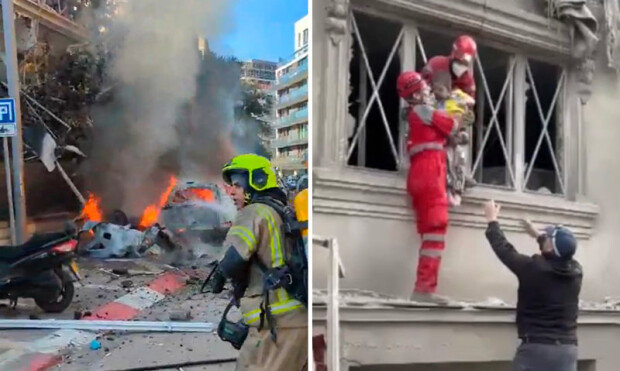
U.S. President Donald Trump said on March 23 that Washington had reached agreement with Iran on 15 points, including the abandonment of its nuclear program, in remarks to CNN. Speaking to reporters later the same day, he added that the two sides would also negotiate over control of the Strait of Hormuz, which Iran has blockaded. “It will be opened,” Trump said, adding that he and Iran’s supreme leader would jointly manage the waterway.
The remarks marked the first time since the outbreak of the conflict on Feb. 28 that Trump has asserted direct contact and prospective negotiations between the United States and Iran. In a post on Truth Social, he said the two sides had engaged in useful and productive discussions over the past two days and announced a five-day pause in previously threatened strikes on Iranian power plants and other facilities. He added that agreement had been reached on nearly all issues and stressed that both sides strongly want a deal.
Amid the developments, Politico and Axios reported that Mohammad Bagher Ghalibaf, Iran’s parliament speaker, has emerged as a potential counterpart in negotiations with Washington. Ghalibaf is known as a close associate of Mojtaba Khamenei, who was elected Iran’s supreme leader on March 8 but has not appeared in public, prompting speculation about his condition. Reuters reported that talks aimed at ending the conflict could be held as early as this week in Islamabad, the capital of Pakistan.
Iran, however, denied any direct contact with Washington. Foreign Ministry spokesperson Esmail Baghaei told the state-run IRNA news agency on March 23 that Iran had received messages in recent days, through several friendly countries, indicating that the United States was seeking negotiations to end the war, and that Tehran had conveyed only its principled position. He said there had been no negotiations or dialogue with the United States during the past 24 days of what he described as an imposed war. Ghalibaf also rejected the reports on X, calling Trump’s remarks an attempt to manipulate financial markets.
Despite the denials, analysts say the growing strain of a prolonged conflict could push both sides toward indirect contact or backchannel diplomacy through third countries. For Iran, publicly acknowledging talks with the United States may be politically difficult, given the risk of backlash from hard-line factions and concerns about weakening the legitimacy of its theocratic system. Some observers also suggest that Trump’s emphasis on negotiations could be aimed at buying time to prepare for a potential deployment of ground forces while shaping perceptions through strategic messaging.
Jin-Woo Shin niceshin@donga.com

![[사설]당 대표의 ‘기괴한 알박기’에 꼼짝 못 하는 국민의힘](https://dimg.donga.com/c/138/175/90/1/wps/NEWS/IMAGE/2026/06/29/134205596.1.jpg)

![[횡설수설/장원재]日 월드컵 감독은 고졸 비주류](https://dimg.donga.com/c/138/175/90/1/wps/NEWS/IMAGE/2026/06/29/134205606.1.jpg)




 About Dong-A Ilbo