

U.S. urges Japan to secure Hormuz Strait
U.S. urges Japan to secure Hormuz Strait
Posted March. 21, 2026 09:27,
Updated March. 21, 2026 09:27
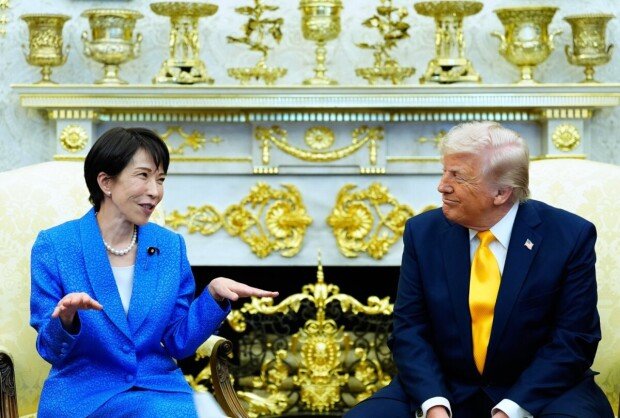
U.S. President Donald Trump met Japanese Prime Minister Sanae Takaichi at the White House in Washington on Wednesday and called on Japan to take a greater role in securing the Strait of Hormuz, a key oil shipping route currently under blockade by Iran.
“We have 45,000 U.S. troops stationed in Japan and are providing substantial financial support,” Trump said. “We expect Japan to step forward.” His remarks, which highlighted the U.S. military presence in Japan, were widely interpreted as a call for Tokyo to participate in efforts to safeguard the strategic waterway. South Korea, which has also received a U.S. request to dispatch naval assets alongside Japan, now faces a growing policy dilemma.
Addressing the conflict involving Iran, Trump said Japan appeared willing to assume a more active role, adding that the situation differed from that of NATO. He also noted that more than 90 percent of Japan’s oil imports pass through the Strait of Hormuz.
Takaichi greeted Trump with an embrace upon arriving at the White House, offering a warm reception ahead of the summit. In her opening remarks, she praised the U.S. president, saying she believed he alone could bring peace to the world.
After the meeting, however, Takaichi adopted a more cautious tone. While acknowledging a shared understanding of the need to secure the Strait of Hormuz, she said she had explained in detail what measures Japan could and could not take under its legal framework. Her remarks suggested the constraints imposed by Japan’s constitution on deploying the Self-Defense Forces to conflict zones.
Separately, the two countries agreed to proceed with a second round of Japanese investment in the United States worth $73 billion. The plan includes the construction of small modular reactors and natural gas power plants.
In-Chan Hwang hic@donga.com





 About Dong-A Ilbo