

Iran attack signals a harsher world order
Iran attack signals a harsher world order
Posted March. 02, 2026 09:02,
Updated March. 02, 2026 09:02
Ayatollah Seyyed Ali Khamenei, Iran’s supreme leader, was killed in a large-scale military operation conducted by the United States and Israel. Khamenei had ruled the theocratic state for 37 years, leading its nuclear and missile programs while maintaining a sustained confrontation with the United States and Israel. Following his death, Iran declared a 40-day national mourning period and established an emergency leadership system overseen by three interim leaders. Even after Khamenei’s killing, U.S. and Israeli forces continued striking targets across Iran, while Tehran launched retaliatory attacks on Israel and U.S. military bases in the Middle East, sharply raising tensions.
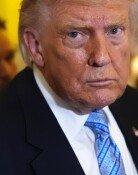
The operation against Khamenei, coming after the capture and transfer of Venezuelan President Nicolas Maduro earlier this year, highlighted the foreign policy approach of U.S. President Donald Trump’s second term: a willingness to deploy overwhelming military force without hesitation when U.S. interests are perceived to be at stake. Trump again set aside international law, established norms, and domestic procedures. Shifting unpredictably between negotiations and military action, he had presented a 10- to 15-day window for talks but ordered airstrikes before that deadline expired.
In the wake of Khamenei’s death, global affairs entered a period of profound uncertainty. Trump immediately called on the Iranian people to rise up, describing the moment as “the greatest opportunity to reclaim your country,” and framed regime change as a matter for Iranians themselves. Yet the absence of a credible alternative force within Iran makes such an outcome uncertain. Analysts note that because the objectives of the Iran operation remain unclear, the scale and duration of future military involvement could determine whether the conflict becomes another protracted war with no clear exit.
An era dominated by raw power politics is likely to affect the Korean Peninsula as well. The world is watching closely, speculating about which country might be next after Venezuela and Iran. North Korea, which proclaims itself a nuclear-armed state, cannot assume it will be exempt. Pyongyang may harden its refusal to relinquish nuclear weapons, yet it will also face pressure from Trump’s overtures for dialogue.
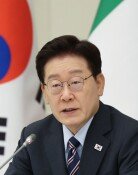
The era of power politics poses a serious challenge for South Korea. In a world increasingly governed by survival of the fittest, both self-reliance and strong alliances are crucial. South Korea must bolster its defense capabilities and maintain a high state of readiness, while remaining closely aligned with its only treaty ally, the United States. Even if its role is that of a pace-setter, it cannot afford to be a mere bystander. A pragmatic and carefully calibrated diplomatic strategy will be essential to preserve leadership in shaping the future of the Korean Peninsula.




 About Dong-A Ilbo