

Iran strike kills Khamenei and unnerves the region
Iran strike kills Khamenei and unnerves the region
Posted March. 02, 2026 09:00,
Updated March. 02, 2026 09:00
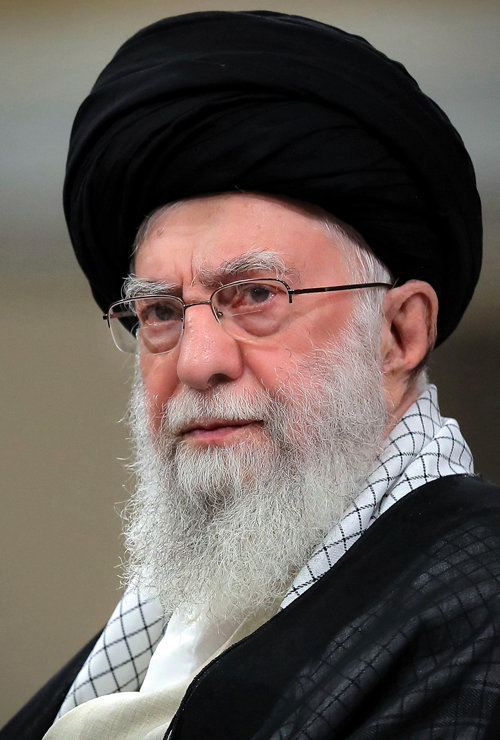
U.S. President Donald Trump on Feb. 28 launched a surprise airstrike on Iran that killed Supreme Leader Ali Khamenei. Khamenei, who had ruled the theocratic state with an iron grip for 37 years, led Iran’s nuclear and missile development while maintaining sustained confrontation with the United States and Israel.
After ousting Venezuelan President Nicolas Maduro in January, Trump this time ordered a strike on Iranian soil to eliminate Khamenei, whom close U.S. ally Israel regarded as an existential threat. The move underscored what analysts describe as the Trump administration’s increasingly forceful pursuit of a security strategy centered on imposing order through strength. Concerns are also mounting that global affairs are entering a period of extreme uncertainty, with little visibility into what may come next.
U.S. and Israeli forces conducted coordinated strikes on facilities where Khamenei and other senior officials had gathered. Iranian state media said the operation, dubbed “Epic Fury” by Washington and “Roaring Lion” by Israel, killed several members of Khamenei’s family, including his daughter, son-in-law and granddaughter. Multiple high-ranking officials were also reported killed, including the commander-in-chief of Iran’s Islamic Revolutionary Guard Corps, the elite military force often described as the regime’s most powerful security organ.
After the strike, Trump said the goal was to eliminate an imminent Iranian threat and protect the American people, and he stressed that fully neutralizing Iran’s nuclear capabilities was the operation’s top priority. He also framed the action as justice for the Iranian people and described it as a rare opportunity for them to reclaim their country’s future. Trump’s remarks indicated that the strike was intended not only to disrupt Iran’s chain of command but also to set conditions for possible political change in Tehran.
President Trump said Iran had been devastated within a single day and warned that precise, large-scale bombardments would continue throughout the week and longer if necessary. His remarks signaled that the operation was not over. On March 1, a day after the killing of Supreme Leader Ali Khamenei, Israel launched additional airstrikes targeting ballistic missile facilities inside Iran.
Iran responded swiftly. About an hour after the Feb. 28 U.S. and Israeli strikes, it fired drones and missiles at major Israeli cities and at 14 U.S. military bases in Bahrain, Qatar and the United Arab Emirates.
Some analysts say that without Khamenei at the helm, Tehran may adjust the scale of its retaliation while exploring a possible compromise with the United States. In an interview with NBC, Iranian Foreign Minister Abbas Araghchi said there could be no limits to defending Iran. At the same time, he added that Tehran would halt its defensive measures if Washington stopped its attacks.
Jin-Woo Shin niceshin@donga.com · Keun-Hyung Yoo noel@donga.com

![[속보]트럼프 “이란과 14일 합의 서명”…혁명수비대 “절대 없을 것”](https://dimg.donga.com/c/138/175/90/1/wps/NEWS/IMAGE/2026/06/14/134105551.1.jpg)






 About Dong-A Ilbo