

Gold rises, bitcoin falls amid Iran shock
Gold rises, bitcoin falls amid Iran shock
Posted March. 02, 2026 09:03,
Updated March. 02, 2026 09:03
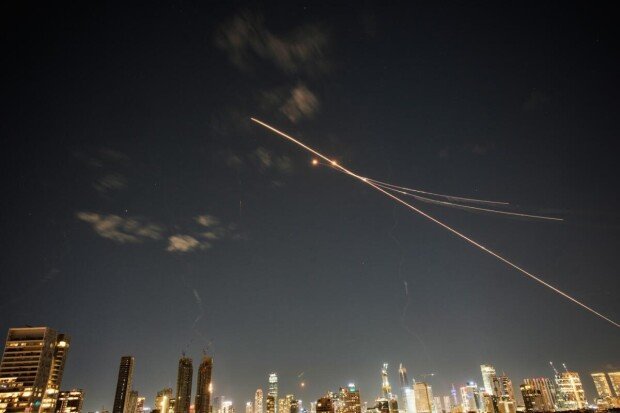
Global financial markets turned volatile after Ali Khamenei was killed in a surprise joint airstrike by the United States and Israel.
Heightened instability in the Middle East briefly drove gold and silver prices sharply higher in over-the-counter trading, while bitcoin, widely viewed as a risk asset, at one point slipped into the $63,000 range. Investors are watching the New York Stock Exchange when it opens March 2 local time for signals on direction. Its performance is expected to influence whether South Korea’s stock market, which resumes trading March 3, enters a correction phase.
According to derivatives trading platform Hyperliquid on March 1, gold futures climbed as high as $5,464.30 per troy ounce on Feb. 28. The spike followed reports of the U.S.-Israeli strike on Iran and stood 4.0 percent above the previous regular-session close of $5,247.90 on the New York Mercantile Exchange. On March 1, gold was trading around $5,310. Silver also advanced to $97.50 during the same period, nearing the $100 threshold.
Bitcoin, the world’s largest cryptocurrency by market capitalization, fell sharply. Data from CoinMarketCap showed bitcoin trading at $63,245 on the afternoon of Feb. 28, down 6.1 percent from $67,661 24 hours earlier. On South Korean cryptocurrency exchange Bithumb, bitcoin was quoted at 92,842,000 won at the same time, a 5.1 percent decline from 97,839,000 won a day earlier.
Bloomberg News reported that bitcoin has been shaken by each major event this year and has failed to follow the rebound in traditional safe-haven assets such as gold and silver. Episodes of geopolitical risk in Iran, Venezuela and Ukraine have repeatedly prompted investors to sell bitcoin and shift funds into safer assets.
Market participants said the KOSPI could enter a correction phase in response to the U.S. and Israeli strikes on Iran. Foreign investors may sell South Korean stocks and move funds into safe-haven assets such as the U.S. dollar. On Feb. 27, the KOSPI closed at 6,244.14, down 1.0 percent from the previous session, after foreign investors posted net sales of 7.528 trillion won.
Noh Dong-gil, a researcher at Shinhan Securities, said that with uncertainty heightened following the death of Iran’s supreme leader and discussions of possible regime change, it is difficult to be confident about a swift rebound in the KOSPI.
Some analysts, however, said the correction may not be prolonged. They noted that the impact on exports by major semiconductor firms such as Samsung Electronics and SK hynix, which have led the recent rally in the domestic market, is likely to be limited.
지민구 기자 warum@donga.com








 About Dong-A Ilbo