

Olympic performance links Cha Jun-hwan to Milva
Olympic performance links Cha Jun-hwan to Milva
Posted February. 21, 2026 08:47,
Updated February. 21, 2026 08:47
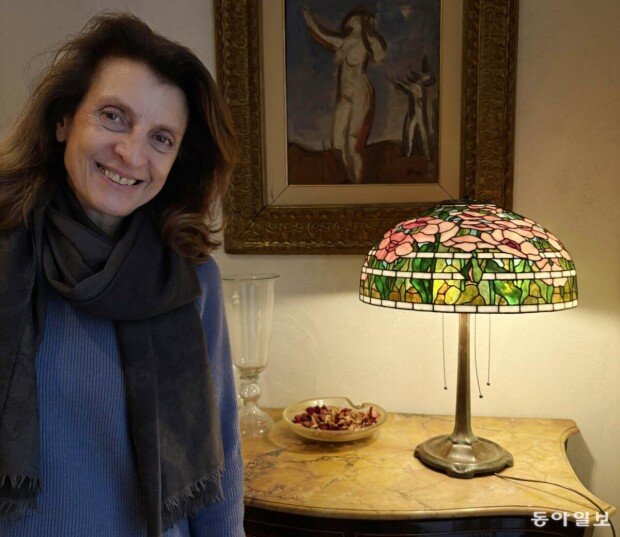
Martina Corgnati, 63, a professor at the Brera Academy of Fine Arts and daughter of Italy’s beloved singer Milva, was inundated with cellphone messages on Feb. 13 local time while on a business trip. Videos sent by acquaintances showed South Korean figure skater Cha Jun-hwan, 25, performing to Milva’s voice during the men’s singles free skate at the 2026 Milan-Cortina d’Ampezzo Winter Olympics.
Milva had a deep love for all sports. Corgnati said her mother, who passed away five years ago from a neurovascular disease, would have been overjoyed to see the performance. A visual arts scholar trained in fine art history, Corgnati noted that Cha’s skating struck her not simply as athletic execution but as a choreographed work of dance.
The day after returning from her trip, Corgnati set out with a letter and a gift for Cha. Coincidentally, during the Games, the Korea House established in Milan by the Korean Sport and Olympic Committee was located next door to the building that now serves as the foundation office in Milva’s former residence.
Inviting a reporter to the foundation office on Feb. 19, Corgnati greeted the visitor with a warm embrace and a traditional cheek kiss before serving a shot of espresso in what she said was her mother’s favorite cup. She recalled that when she went to deliver the letter, more than 200 people were lined up outside Korea House because it was a Sunday. She asked a security guard to arrange a meeting with a representative of the South Korean team, identifying herself as Milva’s daughter, but the guard said he did not know who Milva was. Fortunately, another staff member nearby understood the situation and helped ensure the letter was delivered.
Corgnati said she was deeply moved to learn that her letter had safely reached Cha and was later mentioned in news reports. “This connection feels almost like a miracle,” she said with a smile. “How could it be that Cha performed to my mother’s voice, and that Korea House was located right in front of her former home? It feels like destiny.”
She noted that her mother had performed in South Korea seven times. Although Milva enjoyed greater popularity in Japan, she always tried to include Seoul in her itinerary when traveling to Tokyo for concerts. She was especially fond of galbitang, a Korean beef short rib soup. “I truly wanted to tell Cha that my mother, watching from above, would have been deeply touched,” Corgnati said. During her concerts in South Korea, Milva also drew attention for singing the Korean art song “Barley Field” with fluent Korean pronunciation.
“My mother was born into poverty and rose to become a leading singer,” Corgnati said. “People speak of talent, but talent alone is never enough. Her passion and dedication were extraordinary. She is someone who can serve as a role model for future generations. I am grateful that through the common language created by Cha’s movements, people around the world can remember my mother together.”
Bo-Mi Im bom@donga.com




 About Dong-A Ilbo