

Highs and challenges of South Korea’s right wing
Highs and challenges of South Korea’s right wing
Posted January. 10, 2026 08:56,
Updated January. 10, 2026 08:56
When was the heyday of South Korea’s conservative parties? Former President Kim Young-sam is often the first figure that comes to mind. Through a bold merger of three parties, he brought an end to military rule and established the country’s first civilian government. Another peak came during the consecutive administrations of Presidents Lee Myung-bak and Park Geun-hye. During that period, the Grand National Party and its successor, the Saenuri Party, secured majority control in both the 18th and 19th National Assembly elections. The conservative resurgence also included landslide victories in the Seoul and Busan mayoral by-elections, the unexpected rise of former party leader Lee Jun-seok as a 30-year-old with no prior elected experience, and former President Yoon Suk Yeol’s return to power, followed by sweeping wins in local elections in 2021 and 2022.
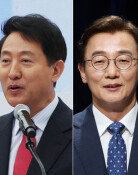
Among veteran conservatives, however, many point to the period surrounding the 15th general election in 1996 as the party’s true golden age. At the time, the conservative camp successfully broadened its political base while carrying out sweeping personnel reforms. After suffering a crushing defeat in the first nationwide local elections in 1994, the ruling Democratic Liberal Party faced a growing sense of crisis. In response, it recruited figures from across the ideological spectrum and rebranded itself as the New Korea Party. It was during this period that Lee Jae-oh, now chairman of the Democratic Movement Memorial Association, and former Minister of Employment and Labor Kim Moon-soo joined the party.
The opposition and progressive camps were stunned and felt a deep sense of betrayal. That reaction stemmed largely from the stature and moral authority Lee Jae-oh and Kim Moon-soo had earned through their roles in South Korea’s pro-democracy movement. Lee was a towering figure in civic and grassroots activism, having been imprisoned five times for resisting authoritarian rule. After the June Democratic Uprising in 1987, when many activists moved to Kim Young-sam’s Unification Democratic Party or Kim Dae-jung’s Peace Democratic Party, Lee instead founded the People’s Party to defend the progressive camp’s independence.
Kim Moon-soo was equally influential as a leader of the labor movement. Stories still circulate in labor circles that figures such as Roh Hoe-chan and Sim Sang-jung could not even offer a business card in his presence. As head of the Seoul Labor Movement Federation in the 1980s, he led some of the era’s most militant labor struggles under the banners of worker political empowerment and social transformation. Even after being taken by the Defense Security Command and subjected to severe torture, he refused to betray fellow activists, including Sim. Like Lee Jae-oh, Kim chose to remain with the People’s Party rather than join the Democratic parties.
That Lee Jae-oh and Kim Moon-soo were later able to enter a conservative party reflected the decisiveness of former President Kim Young-sam, the party’s drive for reform, and its openness to inclusive, additive politics. Former Prime Minister Lee Hoi-chang, known as the “straight-arrow judge,” who resigned after 127 days following clashes with Kim, and former Prosecutor Hong Jun-pyo, nicknamed the “Sandglass prosecutor,” also joined the party in 1996. Revitalized through this wave of recruitment, the New Korea Party overcame the opposition’s campaign for a regime judgment in the 15th general election, winning 139 seats and retaining its position as the largest party in the National Assembly.
On the day President Lee Jae-myung nominated former lawmaker Lee Hye-hoon as minister of strategy and finance, the People Power Party moved swiftly to expel her. Party leaders branded her a traitor and launched an all-out effort to block her confirmation. Party leader Jang Dong-hyuk went further, stressing party loyalty and arguing that the situation arose because those involved had not been properly disciplined. The leadership also reinstated figures aligned with former President Yoon Suk Yeol and activated its ethics committee to pursue disciplinary action against former party leader Han Dong-hoon.
Once a party that expanded its strength through inclusiveness and the recruitment of figures such as Kim Moon-soo and Lee Jae-oh, it now appears fixated on exclusion. For Jang, the more pressing task is not punishing alleged traitors or disciplining Han, but confronting why the party abandoned the strategy of expansion that once underpinned its success.
Sung-Yeol Yoo ryu@donga.com






 About Dong-A Ilbo